

Health horizons
Rapid advances in cancer care
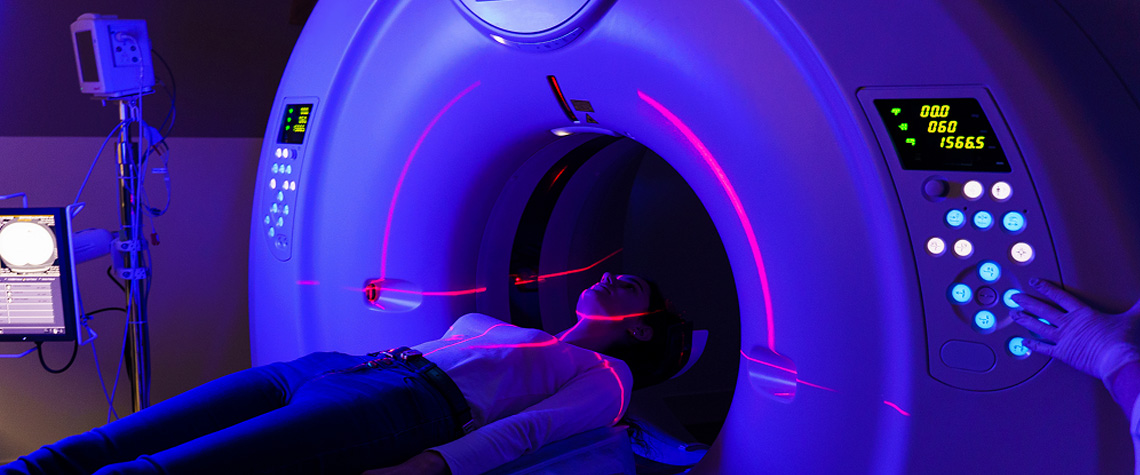
The rapid and ongoing expansion in personalised and precision cancer medicine is bringing more and more potentially game-changing advances within sight.
Dr Tim Woodman, Medical Director for Policy and Cancer Services at Bupa UKI, says, “Knowledge from different strands of science — including genomics, immunology, vaccines, robotics and artificial intelligence — are coming together in ways that were once unimaginable.”
Areas of innovation
Immunotherapy will continue to expand with the creation of new treatments which use checkpoint inhibitors to unmask cancer cells so the body’s immune system can see and destroy them.1
CAR T-cell therapy, which involves collecting and modifying some of a patient’s own immune system T-cells, is already being used to treat some blood cancers. Now researchers are exploring ways to expand its use against solid tumours.2
Another important advancement is the recent announcement of a new antibody therapy which strips away a sugar-based cloak of invisibility pancreatic cancer cells use to evade the immune system.3
Vaccines are being developed which build on the mRNA technology used to create Covid vaccinations. The hope is that these will deliver the genetic code to build specific cancer-killing antigens.4
Researchers at the Institute of Cancer Research (ICR) in London are working on oncolytic viruses, which combine a harmless virus and targeted cancer drug, to infect and kill cancer cells while leaving healthy ones unharmed.5
And a recently published paper suggests mRNA Covid vaccines themselves also influence the immune checkpoint inhibitors which extend survival in some cancer patients.6
Genomics is not only being used to identify people who are at higher risk of cancer, it is also being used to investigate the epigenics of cancer cells.
This helps to predict how quickly a cancer is likely to progress, the most effective treatment7 and the risk of recurrence.8
Diagnostic advances such as non-invasive liquid biopsies which use a blood sample to detect circulating tumour DNA (ctDNA) will enable earlier detection of disease.9
These tests, which measure a by-product of cancer-related changes called methylation, are already being trialled to guide treatment for some breast cancers.10
ICR researchers have also developed Evolutionary Informed Resistance Assays (EIRAs) which predict how bowel cancer evolves to become resistant to chemotherapy. This helps clinicians design treatments that stay ahead of the cancer by targeting its pathway to drug resistance.11
Dr Woodman says, “At Bupa we are constantly monitoring the latest research and clinical trial data, and looking at how we can improve cancer prevention, diagnosis and care.”
Specialist cancer centres
Bupa’s Specialist Centres for breast, bowel and — more recently — prostate cancer illustrate how these advances are being actioned to improve patient care.
This cancer care pathway provides fast-tracked access to any necessary diagnostic tests and scans.
Looking at prostate cancer specifically, men may be offered a Prostate Screening EpiSwitch (PSE) test — which looks for specific signatures in the 3-D structure of genes12 — alongside the standard prostate specific antigen (PSA) test.
Combining these non-invasive blood tests provides a diagnosis with 92% accuracy and an all-clear with 94% accuracy.13
This reduces the potential for unnecessary anxiety and invasive investigations and treatments associated with stand-alone PSA testing.14
Limitations
Dr Woodman explains, “One of the limitations of PSA testing is that levels can spike as a result of an infection, inflammation and even exercise. They also increase with age.”
Conversely, it’s estimated that as many as one in seven men with prostate cancer have what is considered to be a ‘normal’ PSA reading.15
Although a recent US study suggests that a more targeted approach to PSA screening could reduce deaths by 13%.16
Dr Woodman says, “An increasingly targeted approach is definitely the direction of travel, not just in diagnosis, but in all aspects of cancer prevention and care.”
Sustainability
But he adds, “As we look at smaller and smaller groups of patients, developing targeted therapies starts to get very expensive — and that raises difficult questions around cost and sustainability.
“This highlights the importance of using tools such as genomic tests to identify the most effective treatments for each patient, at each point in their care.
“Another benefit of this approach is that it spares patients from unnecessary treatment and side effects and minimises the use of costly therapies that are unlikely to work.”
These advances raise questions for business, too. Not only around the challenge of how to provide better care while still containing costs, but also because access to healthcare is increasingly important to employees and their families.
Demand for PMI
As healthcare providers prioritise cancer care, persistent challenges in accessing timely treatment are increasing the demand for private medical insurance.
YouGov research shows that more and more people are turning to private to overcome delays and secure faster access to care.17
A third of those who have had private treatment have done so for the first time and one in four were funded by their workplace insurance.
Crucially, it’s younger people — the talent of tomorrow — who most value access to private healthcare. Research for the professional services network PwC shows that adults aged 18 to 24 are twice as likely access private healthcare than those over 55.18
And People Management, which is published by the Chartered Institute of Personnel Development, reports that 55% of 18 to 34-year-olds prioritise benefits packages when looking for a career move.19
Business consideration
Another business consideration is the impact that delayed diagnosis and care has on absence and productivity.
Research for the Private Healthcare Information Network shows that businesses are turning to private healthcare and insurance to mitigate this impact and 80% of people with private medical insurance (PMI) are covered by a policy taken out by their employer.20
Tim says, “All the data suggests that access to PMI — and the reassurance that fast-track access to specialist cancer centres — will become increasingly important for recruitment and talent retention.
"If it is not already integral to your business plans, it will be on those of your competitors.”
Bupa has the expertise and resources to help your organisation ensure employees can access timely and evidence-led cancer and healthcare.
We can also provide the knowledge and a wide range of support and tools to drive initiatives which increase workplace wellbeing and reduce the risk of disease.
If someone in your team is worried about signs or symptoms of cancer they should be encouraged to seek advice.
If they have Bupa health insurance, they may be able to access digital GP appointments via Blua on the MyBupa app during the day, weekends, evenings and bank holidays*.
To find see more expert-led resources to help employers support their workforce visit the Workplace Wellbeing Hub for guidance and advice.
*Please ensure to check policy documents or give us a call to see what is covered within the policy. Access to digital GP from 6am to 10pm every weekday and 8am to 8pm on weekends.
1https://www.cancerresearchuk.org/health-professional/treatment-and-other-post-diagnosis-issues/immunotherapy-and-its-side-effects#immunotherapyaccordion0
2https://www.nature.com/articles/s41571-025-01075-1
3https://www.eurekalert.org/news-releases/1103714
4https://www.rcpath.org/resource-report/an-update-on-mrna-cancer-vaccines.html
5https://www.icr.ac.uk/about-us/icr-news/detail/new-research-reveals-how-combining-viruses-with-targeted-drugs-can-boost-cancer-killing-immune-responses
6https://www.nature.com/articles/s41586-025-09655-y
7https://pmc.ncbi.nlm.nih.gov/articles/PMC10128461/
8https://www.sciencedirect.com/science/article/pii/S2352304225003198
9https://pubmed.ncbi.nlm.nih.gov/38443752/
10https://www.icr.ac.uk/about-us/icr-news/detail/next-generation-breast-cancer-drug-targets-tumours--before-they-have-a-chance-to-grow
11https://www.icr.ac.uk/about-us/icr-news/detail/scientists-find-new-way-to-predict-how-bowel-cancer-drugs-will-stop-working
12https://pmc.ncbi.nlm.nih.gov/articles/PMC12249354/
13https://prostatecanceruk.org/about-us/news-and-views/2023/02/can-this-new-blood-test-diagnose-prostate-cancer-with-94-accuracy
14https://www.cancerresearchuk.org/health-professional/diagnosis/investigations/psa-testing
15https://prostatecanceruk.org/about-us/news-and-views/2023/02/can-this-new-blood-test-diagnose-prostate-cancer-with-94-accuracy
16https://www.nejm.org/doi/full/10.1056/NEJMoa2503223
17https://yougov.co.uk/health/articles/45568-one-eight-britons-turned-private-healthcare-last-1
18https://www.pwc.co.uk/press-room/press-releases/younger-people-twice-as-likely-to-access-private-healthcare--wit.html
19https://www.peoplemanagement.co.uk/article/1851721/half-younger-workers-say-benefits-top-priority-when-job-hunting-report-finds
20https://www.ihpn.org.uk/news/ihpn-response-to-private-healthcare-information-network-phin-data-update/