





Workplace Academy
Shaping the future of the workplace health and wellbeing, together

How can the Academy help my business?
The health and wellbeing of your workforce has never been so important. The Workplace Academy is a modular educational programme designed to provide businesses with exclusive insights and practical tools to help you understand how best to look after your team s health and wellbeing.
Our experts will share the latest insights on key health and wellbeing trends and resources to help businesses build actionable plans that really make a difference.
Who can attend?
Our Academy sessions are designed to be interactive so you can spend quality time with health and wellbeing experts. Each session is available for up to 20 attendees. If you have any queries, please speak to your account manager.

Intermediaries
Intermediaries or broker businesses who support and market healthcare schemes. This can include consultants, principals and administration colleagues.

Employers
This might include HR directors and managers, scheme administrators, finance directors and procurement colleagues, or anyone involved with their company healthcare scheme and/or employee health and wellbeing.
Academy sessions
For bookings and more information about the sessions, please contact your account manager or contact [email protected]

Cancer
The risk of cancer is increasing and there’s a high chance someone in your workforce will be affected. The Cancer module gives you the tools and resources to better support colleagues with cancer, how best to raise awareness and spot the symptoms sooner.

Mental Health
With 1 in 4 people1 experiencing mental health problems the mental health module explores how workplaces can equip managers to better spot the signs, foster more open cultures and build better resilience.

Muscles, Bones and Joints
Muscle, bones and joints pains can affect your team’s overall wellbeing – both inside work and outside. The MSK module provides you with the tools and resources to better support your employees and keep your business thriving.

Women’s health
In the past, less focus has been given to women’s health issues in the workplace. This has led to poorer health outcomes and a lack of progress for women in business and leadership.
This module gives tips, tools and advice on how organisations can better support women’s health in the workplace.
Bitesize videos
Explore our latest bitesize Workplace Academy videos. We share clinical advice, first-hand insights, and resources to help managers support their employees.
Supporting employees through cancer
Two Bupa colleagues have an open conversation about cancer at work. They discuss what it’s like to go through cancer, and how managers can make a real difference.
Hi, I'm Dr Ravi Lukha, Medical Director at Bupa.
Welcome to this Academy module where today we're discussing cancer.
Cancer is the condition where abnormal or damaged cells in a specific part of the body grow and multiply uncontrollably when they shouldn't.
The cancerous cells can invade and destroy nearby healthy tissue, including organs such as the bowel.
In the UK, it's estimated that 3 million people are living with cancer and 1 in 2 people born after 1960 will be diagnosed with some form of cancer during their lifetime.
Over 120,000 people of working age get a cancer diagnosis each year, with over 1 million people of working age predicted to be living with cancer by the year 2030.
However, a staggering 45% of employees with cancer believe that their colleagues consider them a burden during their cancer journey, with 35% feeling unable to talk openly with their colleagues about their diagnosis and treatment.
Line managers, therefore, have a crucial role to play in supporting their team members with cancer by creating an environment where colleagues feel able to discuss their needs and experiences and helping to provide the right support and adjustments to enable them to manage both the condition and their wider wellbeing more effectively.
By creating a workplace culture that prioritises health and supports those affected by cancer, you can contribute to a healthier, more supportive work environment for everyone.
Let's find out how.
I'm now joined by two Bupa colleagues to discuss their lived experiences as a line manager and team member around the topic of cancer.
Tim, thanks for joining us today.
Could you give us an overview of your cancer journey you've had and the impact it's had on you in the workplace?
So about six years ago, I found, like most men of my age, I was getting up at night a bit more often than normal for a pee.
I didn't think much of it, it got a bit more frequent, and I had this nagging thought at the back of my head, being a doctor, there might be something, but also being a doctor buried my head in the sand until, as with most things, my wife got a bit fed up with it.
I went to see a GP at Bupa, they referred me to a urologist, who checked my PSA.
Normally for a man of my age it should be kind of 3.
Mine was 85, and he said, 'You've got prostate cancer and it's spread to your lymph glands'.
I thought, 'OK'.
He said, 'I'm going to send you to see an oncologist, and we'll probably throw the kitchen sink at it.
' So that's going to mean chemotherapy.
Then it's going to mean radiotherapy.
And all the way through it's going to mean hormone therapy.
Now, from my point of view, as I say, I kind of half suspected the diagnosis.
I knew about the treatments, I didn't know about the effects of the treatments particularly.
So there was an element of the unknown in it, and I didn't really know at that point what impact it was going to have with regard to work.
Did this mean I was going to have to take months off?
Did it mean I'd just be able to work normally?
Did it mean I'd have to give up work altogether?
So, it was just a big adjustment in the first few months while I got used to the treatment and how I was coping with it.
I could have quite easily taken three months off while I had my chemo.
But I think that would probably would have made things worse for me.
So it was a case of building work around the fact I was going to be tired for 2 or 3 days, every couple of weeks for my chemo.
And then when I had my radiotherapy, it was half a day, every day, for seven weeks.
So again, it was just adapting around that, really.
And Robin, what was your approach to supporting Tim in the workplace as his line manager?
So, when Tim first got his diagnosis and started treatment, we were actually peers rather than me being his line manager.
So, it was sometime during Covid, I think about four years ago or so, when I made the transition to become Tim's manager.
So, at that point there was actually already an element of sort of structure in place for how to communicate with Tim during his time at work and away, as well as, some sort of thought had gone into the ways of working and such like.
So from that perspective, I suppose it was slightly easier for me because there was already something in place.
That said, you know, a bit like Tim, I'm also a GP and I've seen lots of patients and dealt with lots of patients over the years.
But for me, this was the first time that I'd had a team member that I was now responsible for in the workplace that was undergoing, something significant.
So for me, there was also that learning curve, a learning curve in terms of how best to support Tim, how to navigate the system, but also understanding what other support was available.
So I think for me, there were various things around communication and flexibility, that I think were quite helpful just in terms of having regular check-ins, trying to be as open and honest as we could be in terms of how you were feeling, what was needed, did you need extra flexibility or time off?
Those sorts of things.
So, I think it's fair to say, a time of change for all of us, particularly Tim.
But also from my perspective in terms of how to navigate it too.
And, Tim, what were the sorts of adjustments that best worked for you, both in the early days, but also as your treatment continued into the latter years, as you said?
I think the main thing was the flexibility that Bupa was able to offer.
Because nobody's cancer experience is entirely predictable.
You know what treatments you're going to have, you don't know how they're going to affect you.
So, it's no good saying I'll be rubbish for three days every three weeks for the next six months, because something might happen in between.
Bupa and Robin were always very flexible if I said today's really not a good day.
As time went on, I kind of began to realise what the limitations were.
So, for example, I've been taking hormone treatment now for nearly 6 years.
So, I haven't got a lot of muscle left.
So, I can't walk particularly great distances, have great trouble with stairs, things like that.
So again, you know, we arrange venues where I don't have to use stairs too much.
Also I do still get tired very easily, which again is a combination of the various treatments that I'm on.
So, if I have to travel it's quite nice that I can have a hotel stay beforehand so I don't have to race against time.
It's things like that and it's really just accommodating the unpredictability, because like I said, you don't know what's going to happen until it does.
Thanks, Tim.
I think that's a really important message to any line manager to adapt as things change.
Robin, can you give me some examples of some additional steps you gave to support Tim as his journey developed with his condition, and what that meant for your wider team?
When Tim was first diagnosed and started having his treatment, because it was during Covid, we were already in that phase of hybrid working.
So we had a routine going within the team already.
I think if that hadn't been the case, certainly that would have been a conversation that we needed to have in terms of flexible working, what was expected with regard to coming into the office and what Tim would have been capable of.
Then what happened as we transitioned back to a more office-based environment, you had to pay far more attention to, that sort of inclusivity piece.
So everything from what what's the most sort of suitable means of transport.
So it might have been easier to drive rather than taking the train.
And then you have to think, which office are we going to?
Is there a lift or an escalator?
You know, is the room suitable?
Things which maybe you've taken for granted previously.
Suddenly it was something that you had to think about and actually think about far enough in advance to make it happen.
So again, I think, you know, I very much called on support from the broader team, to help me with some of those things.
And again, it comes back to that point about just having open and honest conversations about did Tim even need to travel?
If he did, what did you think he was capable of for that particular journey?
And then in a similar way some of it was around keeping other people apprised of what was going on.
So I used to have regular touchpoints with, our Human Resources team.
So that they understood, actually, you know, how well are we doing, how well was Tim doing?
How well was I managing with the broader team and how were we working around those things?
But also, helping to plan for if there were certain things that Tim couldn't do, was I able to move that work to someone else?
Was it something that we were able just to stop doing completely?
And, actually, if Tim needed a longer period of time off, to actually to help me with things like planning for those intermediate steps or succession planning, etc.
So, yeah, all of those things very much sort of came out as a result of going through the different phases, both in terms of Tim's illness, but also I think the environment that we were working in as well.
Thanks, Rob.
I think it's really important that we remember those, elements that people might need adjustments for that we might not think of first-hand and it's important to think about the wider team as well.
Tim, what would your advice be to anyone else going through a cancer journey on how they might be able to seek advice or support in the workplace?
I think the first thing is, obviously, you know, we're not the same.
Cancer is not uniform.
People will deal with things differently.
But you read a lot about people battling with cancer.
It doesn't have to be a battle.
I think it's really important, if you can, if you feel able, open up, tell your manager, tell your people team what the issue is.
Tell them that you don't know how things are going to be in the future.
It's no good saying to somebody, 'OK, so you'll be back in three months, will you?
You don't know.
You won't feel the same.
You will never feel the same.
I've got old man's arms and a permanent menopause.
But it's better than the alternative.
But I think it's really important that, you know, you engage as much as you're comfortable with.
I've been very open.
Other people don't want to do that.
That's fine.
But you need to let the important people know what's going on.
You need to let them know what your boundaries are in terms of communication.
But, you know, just be flexible and accept that things are going to change.
I think that's a great message.
And in the same vein, Robin, from your perspective as a line manager, what's the advice you'd give to line managers going through a similar situation with their team members?
I very much echo some of the points that Tim just made there.
So I think communication is very, very important and that the other ones are flexibility and adaptability.
So, with communication, just building that rapport, having those open and frequent lines of communication because things do change and they can sometimes change at short notice.
So, actually, if you've got that line of communication there and a sense of confidence in how you use it, I think that goes a long way.
The other thing I've learned is around support.
So there's a lot of support out there, both support for the person that's going through the health journey, but also for the people around them, whether it be the manager, the team or other people that that need to know.
So I think, you know, there's an element there of just don't be afraid to ask.
Don't be afraid to say, don't be afraid to ask.
There's more support out there than you probably imagine.
I can pretty much guarantee that.
Thanks, Robin, Tim, for sharing your experiences of going through cancer and as a line manager.
I think it's been a really, valuable resource for others going through something similar.
Thank you for watching this Academy module on cancer.
Today, we've heard one person's story, but it's important to remember that everyone's experience of cancer is different.
What matters most is creating a culture where people feel safe to speak up, seek help, and support one another without fear of judgment.
Having the right conversations as a line manager is often the first step towards helping team members navigate living with cancer by understanding the challenges and putting the correct support measures in place to try and help alleviate them.
For more tools and support for dealing with health and wellbeing issues in the workplace, head to Bupa's Workplace Academy web page at www.
bupa.
co.
uk/academy.
If you're a Bupa health insurance customer with cancer cover, you are supported by our cancer promise.
If you are diagnosed with cancer, we'll be there to look after you from diagnosis through to treatment.
You also get fast access to our specialist cancer centres for diagnosis and treatment plans for breast, bowel and prostate cancers.
Thanks again for watching.
Helping employees with fertility challenges
Hear from two Bupa colleagues as they have an honest discussion about fertility in the workplace. They talk about how fertility issues can impact mental health, and how managers can offer support.
Hi, I'm Dr Ravi Lukha, Medical Director at Bupa, and welcome to this Academy module where today we're discussing women's health, specifically fertility, and how line managers can support their team members on the journey of trying to conceive.
Fertility challenges can affect women at any stage of life and for many different reasons, from underlying health conditions like polycystic ovary syndrome or endometriosis to age- related factors, lifestyle or unexplained infertility.
For those actively trying to conceive, the process can be emotionally and physically demanding, especially when combined with the pressures of work.
In the UK, around 1 in 7 couples experience difficulties conceiving, and many women undergo fertility treatment while continuing to manage their careers.
The impact on mental health, energy levels and emotional resilience can be significant.
Yet many feel unable to speak openly about their experiences in the workplace.
This lack of visibility and support can lead to increased stress, feelings of isolation and even decisions to step away from work.
But it doesn't have to be this way.
With the right understanding and support, workplaces can become safe and inclusive environments where women feel empowered to navigate their fertility journey without stigma.
Line managers have a vital role to play in this through empathy, offering flexibility and creating space for open conversations.
Let's find out how.
I'm now joined by two Bupa colleagues to discuss women's health, specifically fertility in the workplace.
Megan, Tori, thanks for joining us today.
Thank you.
Megan, if we can start with you.
Can you give us an overview of your story and how it's impacted you in the workplace?
So, I've been having ongoing fertility issues for the past just over nine years now.
My manager noticed quite I suppose, a decline in my own mental health and my own ability to focus in my role about two or three years ago now.
That's when she kind of first noticed it and just got me to open up about everything.
And then she's encouraged me to go to speak to my GP about my not being able to conceive and trying for so long.
At that time, I took her advice.
I got an appointment with my GP.
It was a bit strange because I decided at that point, let's just stop trying.
Me and my partner came to the decision, we'll stop trying until we spoke to the GP and got some answers.
I actually managed to get pregnant within that time, so I don't know whether it was because the stress was kind of off us.
The happiest day of both our lives was getting that positive pregnancy test, but it didn't last long.
About 10 days later, after that positive test, I started having mild abdominal cramping, spotting and after going to my GP and putting my foot down, basically saying I needed to go to hospital, after numerous tests and things like that, it did turn out that it was an ectopic pregnancy.
So my baby had decided to implant in my fallopian tube.
And with that, there's just zero success of survival.
You're going to lose your baby one way or another.
Mine had actually, it was that far gone it was like seven weeks gestation that it had actually ruptured my tube.
So there was no saving my tube either.
I have to go in for emergency surgery, have my tube removed and my baby.
And ended up having quite a bit of time off work, I'll be honest with you.
Roughly about three months.
Not just the physical aspect of having to get past the surgery and heal from that, because that had it's challenges.
But also the mental side of it absolutely just destroyed me.
Megan, thank you very much for sharing your story and everything that you've been through over the last few years.
Tori, from your perspective, when did you first become aware of what Megan was going through, and how did you manage that?
So, I was probably the first person to learn about all of it.
I wasn't Megan's line manager at the time.
We were peers, so we were both on the same team in our coaching academy, and we had a really close relationship.
So I was very fortunate to be the first person Meg shared her pregnancy with, but it does also mean that, with that, I was also one of the first people to learn that unfortunately, the pregnancy wouldn't be continuing.
The line manager that she did have at the time, I worked really closely with, because I've slowly developed into her position.
She did a great job supporting Meg.
Massive focus on being able to give her time to heal.
There was a lot of support from things like Occupational Health that that line manager went through.
So, as well as being able to offer our sort of local mental health and wellbeing tools and other charities and support systems that are available to people outside of Bupa, like Tommy's charity.
And then a massive part was getting Megan back into work, happy and healthy.
So whilst it was a prolonged absence, we looked at phased returns, managed to support her back into the business over a longer period of time.
That meant that she was able to reintegrate, rebuild personal relationships, but also have that time to both mentally and physically heal.
It's great to hear that Megan's had some really strong support from yourself, a previous line manager, and using resources not just in Bupa but trusted resources outside.
And can you tell us about the further challenges you've had around this journey?
So it's obviously something that is remaining with me indefinitely, probably, now.
I've had fertility investigations.
I'm under a specialist now at Salford Royal.
I've been diagnosed with sub-fertility.
So, it's not the inability to get pregnant, but it's unlikely, basically, to get pregnant, considering how long it's been going on for.
And that diagnosis, it does stick with you, and you do feel a little bit like, ' Is my body just giving up on me?
' I blame myself for a lot of it.
Even though I've been told none of this that's happened is my fault or anything like that.
It's just you just can't help blaming yourself.
If I had done things differently.
Looking forward to the future, I'm trying to have a more of a positive mindset.
With my fertility specialist, she has recommended IVF is probably going to be the best way forward for me and my partner.
So that's what we're looking at at the moment.
In order to do that, though, I'm having to lose weight.
I have lost quite a bit already to be eligible for fertility IVF on the NHS.
But I suppose that's what I'm trying to stay positive for.
I don't want to let the ectopic pregnancy define me and that's it.
And you know, to not be too scared to try again.
Because I'll be honest with you, if I do get pregnant again, I'm going to be terrified.
Thinking that, you know, is history is going to repeat itself?
But you can't let that stop you.
And my goal is, I want a baby.
Thanks, Megan.
That's a fantastic outlook to have after everything you've been through.
Tori, do you want to tell me a little bit about the ongoing support that you give for Megan as her line manager?
Yeah, absolutely.
From the second that we started, our leadership relationship, the priority for me was really just making sure that Megan was in an environment that was both mentally and physically comforting for her.
Knowing that she can share anything that she needs to with me.
And whilst it's a professional environment, and we have loads of amazing tools that Megan takes great advantage of, like our EAP services, like our staff benefits portal, but also knowing that she has that psychological safety with us and that we would have regular wellbeing check-ins and that we continue that conversation around what the end goal is.
And Megan's always got her eye on the prize and she's worked amazingly towards it.
So, on that as well, Megan, in front of this room, you've done such a good job.
And for me, it's just making sure that she has that safe space that she can come to and share her journey, and that she doesn't feel that has to be something that's entirely shied away from, as it's not necessarily work.
And it is very much an independent journey.
And I think over the last 12 months since I've really been taking over as Megan's leader, one of my greatest pleasures coming into work is to see how far she's come in terms of her mental health and adjustments to the diagnosis that she got.
And, actually, to have such a positive mindset towards the future now is one of the greatest pleasures that we've got.
We've taken a load of really positive steps, but the most important thing is making sure that Megan feels safe in sharing the journey with us.
So she's doing great.
Great.
Thanks Tori, and I think that's fantastic advice no matter what the topic's about.
Megan, what would you say to somebody who's going through something similar but unsure about how to open up at work?
Yeah, that's a really good question.
I would just say, just be brave and just be honest.
I wish that I'd have reached out a lot sooner.
I probably was in a bit of denial, how many years it was going on for and was thinking, 'Oh, it'll happen, it'll happen.
' And having the courage to actually speak up to my manager at the time, it's basically been from then that everything's kind of kicked off and I'm able to move forward with my life a bit more with it.
I mean, the ectopic pregnancy wasn't the best thing.
It was a really, really awful point in my life.
But from that, there's positive stuff that's happened since then.
So actually being referred on for fertility testing and having that way forward and that end goal.
But I don't honestly think that I would have made that step had I not been given that safe space, I suppose, to reach out to my manager at the time.
So that's all I'd say is just don't be embarrassed.
You might feel like you're the only one that's going through that, guaranteed you're not.
There are tools and resources out there.
Your manager's not going to be able to wave a magic wand and make it all better and suddenly magic you a baby, but they'll be there to support you in terms of where you need to go in the next steps.
Thanks, Megan.
I think that's great advice.
And Tori, how about yourself?
Same question, essentially, for any line managers going through maybe a similar situation, what advice would you give to them?
You're not expected to know everything.
But the most important thing is to create that safe, secure environment.
When you know that your colleague or peer or whoever you're leading, knows that they can come to you and speak freely about the journey that they're going through, that allows you to find the information you can support them with.
It's not a one-size-fits-all.
And Megan's fertility journey would be and could be different to the next person's.
And it's just taking that time to understand your people and making sure that you're offering everything that you can to them.
I, as a line manager, I'm not a fertility expert, but I am a Meg expert.
And it just means that we managed to get there and we're on a really good path now.
So just learn about your people and then learn about the rest afterwards.
It'll all come together.
Brilliant, thanks Tori.
I think that's a fantastic message to really personalise your approach to each of your team members so thanks for that.
Megan, Tori, thank you very much for joining us today and being so candid about your experiences around women's health and specifically around fertility.
It's been great hearing your stories.
Thank you very much for sharing.
I think it will be a really useful resource for line managers or anyone going through such situations.
Thank you.
Thank you for watching this Academy module on fertility and trying to conceive.
Today, we've heard one person's story, and while every journey is unique, it reflects a broader experience shared by many women in the workplace.
Fertility isn't just a personal health issue, it's a workplace wellbeing issue.
By opening up conversations and putting the right support in place, line managers can make a meaningful difference.
For more tools and resources, visit Bupa's Workplace Academy at www.
bupa.co.uk/academy.
Thanks again for watching.
-
Mind
-
Body
-
Environment
-
Relationships
-
Emotions
-
Learning




Help your team feel better from head to toe.






Learn how your working environment can affect how your team feels.



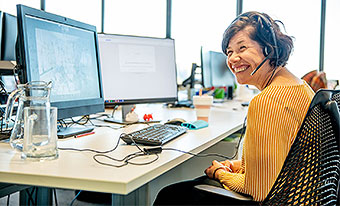
We spend a lot of time with our colleagues, so it’s worth exploring ways you can collaborate better.


Learn how to speak to your team about their emotions, so you can develop a deeper understanding of what they’re going through.



It’s never too late for your team to learn something new.



Health Horizons LIVE
Bringing you the latest healthcare trends, interviews with medical experts and global leaders as well as specialist insight from Bupa: all designed to keep you and your organisation one step ahead.

Follow our LinkedIn page
Bring the latest news and updates directly to your news feed, in real time. We want to hear from you directly, so we encourage you to like, share, comment and ask us questions.
2 Royal College of Psychiatrists, 2021
Bupa Insurance Limited. Registered in England and Wales with registration number 3956433. Bupa Insurance Limited is authorised by the Prudential Regulation Authority and regulated by the Financial Conduct Authority and the Prudential Regulation Authority.
Arranged and administered by Bupa Insurance Services Limited, which is authorised and regulated by the Financial Conduct Authority. Registered in England and Wales with registration number 3829851. Registered office: 1 Angel Court, London, EC2R 7HJ
