

How relationships impact our health

Having positive relationships is good for our health and can increase our happiness. These aren’t just the relationships we have with our partner, family, and friends. They’re also the connections we make with colleagues, neighbours, and the other people we meet during our lives.
Here I’ll explain why having strong relationships can boost your wellbeing and help you deal with life’s challenges.
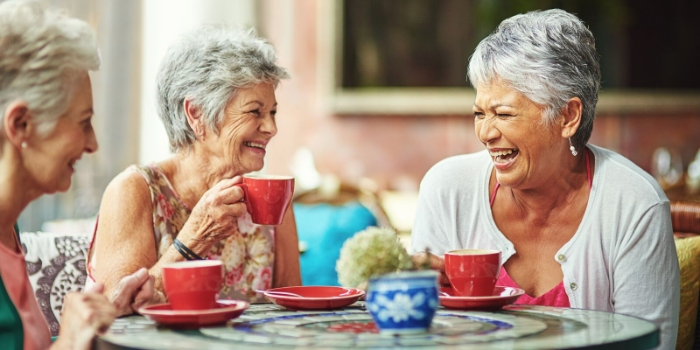
How relationships affect mental health
As humans, we naturally enjoy social interaction. We often need other people in our lives for practical and emotional support.
Feeling lonely or being socially isolated can have a negative effect on your physical and emotional health. But if you have strong social relationships, you may be happier and physically healthier than people who aren’t as well connected. You may also live longer and have fewer mental health problems.
Having a strong social network helps you to know there are people who care for you, and who can help if you need their support. And they know you’ll be there for them in tough times too.
Your social network can help with the following.
- Give you a strong sense of belonging and social identity.
- Make you more likely to keep healthy habits, such as not smoking, drinking less alcohol, exercising more, or seeking health advice when needed.
- Help you to access more information about your health, as well as health services.
- Help you to cope during stressful times in your life.
The importance of positive relationships
Having positive relationships isn’t about having lots of friends. Having a few people to confide in can be better than having a large network of people you hardly chat to. It’s the quality of your relationships that’s important. If your relationships aren’t positive ones, you might feel lonely, even when in the company of family and friends.
People with stable relationships tend to be happier, healthier, and more satisfied with life. Being in an unhealthy relationship can have the opposite effect. Research shows that having unhappy or negative relationships can also make you feel lonely.
Social relationships and our mental health
Being involved in community life can be good for your mental health. And getting to know some of the people who live in your local area may make you feel happier and supported. Getting involved in local groups, sports, clubs, and volunteering can boost your physical and mental health.
Many communities can be found online, through social media, networking sites, or support groups. It’s easier now, more than ever, to connect with people you’ve never met. But while online friends can be supportive and enrich our lives, it’s important to stay safe online too.
Changing times
Our relationships and social connections may change throughout our lifetime. It can be hard to spend time with family or friends when we’re stressed, have caring responsibilities, work long hours, or have other commitments.
Some people feel more socially isolated as they get older. This may be after retirement, bereavement, or if you become less mobile. Your health can affect your relationships too. You may find it harder to keep in touch with family and friends if you’re not feeling your best, physically or emotionally.
Building stronger relationships
If you’d like to feel more connected or find new friends, there are lots of things you can do. Below are some tips to help you build and maintain stronger relationships.
- Be kind to yourself. How you feel about yourself can affect how you interact with others. If you look after your own physical and mental health, it can be easier to keep in touch with your loved ones.
- Find new ways to keep in touch. If you can’t see each other in person, you could try using messaging apps, phone calls, or video chats.
- Be there for them. When you’re talking to your family and friends, make sure to listen. Concentrate on their needs by switching off any distractions, such as your emails or social media.
- Share the fun stuff. Don’t just get in touch when things aren’t going well, as it’s good to share positive news too.
- Be ready to share. If you’re struggling with life’s challenges, talk about how you’re feeling, so your loved ones can support you too.
- Set boundaries. Think about what you like and don’t like in your relationships. For example, you might value your alone time. Let others know what your boundaries are.
- Expand your network. Look for local volunteering opportunities, clubs that interest you, or groups for people with shared interests. And why not see if you can get to know some of your neighbours, if you don’t already?
If you’re worried about your mental health, our direct access service aims to provide you with the advice, support and treatment you need as quickly as possible. You’ll be able to get mental health advice and support usually without the need for a GP referral. Learn more today.
-
Sources Sources
- Guide to investing in your relationships. Mental Health Foundation. Mentalhealth.org.uk, accessed June 2026.
- Loneliness and mental health report – UK. Mental Health Foundation. Mentalhealth.org.uk, accessed June 2026.
- Relationships and community: statistics. Mental Health Foundation. Mentalhealth.org.uk, accessed June 2026.
- Beutel ME, Klein EM, Brähler E, et al. Loneliness in the general population: prevalence, determinants and relations to mental health. BMC Psychiatry. 2017 Mar 20;17(1):97.
- Health impact. Campaign to End Loneliness. Campaigntoendloneliness.org, accessed June 2026.
- Alone, lonely or misunderstood. YoungMinds. Youngminds.org.uk, accessed June 2026.
- Emotional abuse. Relate. Relate.org.uk, accessed June 2026.
- Michalski CA, Diemert LM, Helliwell JF, et al. Relationship between sense of community belonging and self-rated health across life stages. SSM Population Health. 2020 Oct 12;12:100676.
- Kindness matters guide. Mental Health Foundation. Mentalhealth.org.uk, accessed July 2026.
- Ran Z, Wei J & Yang G, et al. Prevalence of social isolation in the elderly: a systematic review and meta-analysis. Geriatric Nursing. Volume 58, 2024, Pages 87-97, ISSN 0197-4572.
- Top tips on building and maintaining healthy relationships. Mental Health Foundation. Mentalhealth.org.uk, accessed July 2026.
About our health information
At Bupa we produce a wealth of free health information for you and your family. This is because we believe that trustworthy information is essential in helping you make better decisions about your health and wellbeing.
Our information has been awarded the PIF TICK for trustworthy health information.

More mental health and wellbeing articles



Did you find our advice helpful?
We’d love to hear what you think. Our short survey takes just a few minutes to complete and helps us to keep improving our healthy lifestyle articles.
Legal disclaimer
This information was published by Bupa's Health Content Team and is based on reputable sources of medical evidence. It has been reviewed by appropriate medical or clinical professionals and deemed accurate on the date of review. Photos are only for illustrative purposes and do not reflect every presentation of a condition.
Any information about a treatment or procedure is generic, and does not necessarily describe that treatment or procedure as delivered by Bupa or its associated providers.
The information contained on this page and in any third party websites referred to on this page is not intended nor implied to be a substitute for professional medical advice nor is it intended to be for medical diagnosis or treatment. Third party websites are not owned or controlled by Bupa and any individual may be able to access and post messages on them. Bupa is not responsible for the content or availability of these third party websites. We do not accept advertising on this page.