


Managers guide to cancer support

Supporting your team through the most challenging times
For most people, cancer will be life changing.
It affects people in both their personal and professional lives. Someone with cancer might be dealing with the effects of treatment as well as the cancer itself. Understanding what employees are dealing with can help you support them better.
Cancer in the workplace resources

Guide: Cancer in the workplace
Use this guide to set up a cancer awareness campaign in your workplace. Get your team educated on and engaged with cancer.

Digital screen resource: World Cancer Day
World Cancer Day is on 4 February every year. Use our digital screen resource in your workplace to show your team the common cancer signs and symptoms.
Supporting people affected by cancer at work
Our experts talk about cancer, its impact and ways to support people affected by it in a series of videos.
Transcript
Who are you?
Hi.
My name's Dr. Tim Woodman.
I'm one of the medical directors at Bupa UK Insurance
where I've been working now for 13 years.
Before I came to Bupa, I was a GP in the NHS,
and I worked in the NHS for about 30 years or so.
At Bupa, I'm responsible for looking at the care
that we provide to our customers who are living with cancer
to help them get better diagnosis, better treatment,
and better all around care.
And to take my mind off of all that stuff
and all the doctoring, I'm really interested in food
and drink, both the consumption and the production,
and also military history because my dad was in the Navy
and my granddad was in the cavalry.
So I find it all quite fascinating.
What is your medical background?
So I trained as a GP.
I qualified an awfully long time ago, back in the 1980s.
As part of my general practise work, I took a lot
of interest in people with cancer
because services weren't very good in those days.
I've worked for some time in a hospice. When I was a gp.
I also did some work in radiotherapy,
which got me even more interested in cancer.
Since I started working for Bupa,
I've become very involved in looking at new treatments,
new innovations, and talking to specialists
and experts about how they treat manage cancer.
I'm a member of the European Society for Medical Oncology,
so I keep up to date as much as I can to make sure
that I'm able to give really good advice
and support to our customers.
What is cancer and how would you explain this to people without a medical background?"
Cancer is a word that strikes fear into a lot of people,
and a lot of that fear is
because they don't understand what cancer is.
Essentially, our bodies are made up of trillions of cells,
and these cells like people, they're born, they grow,
they die, and all of that is controlled by their DNA.
And I'm sure most people have heard of DNA.
If DNA goes wrong, the cells can go wrong.
That might mean they die,
or it may mean they don't die when they should die,
or they divide more rapidly than they should,
and they multiply and they spread into the
tissues that surround them.
That's what we call cancer. Cancer is a malignant tumour.
It's a tumour that can spread whether it's into the tissue
surrounding the original site
or whether it's throughout the body,
through the bloodstream.
How can we focus on optimism instead of fear when talking about cancer?
Cancer is a word that evokes lots of responses in people,
but the commonest response is fear.
And that fear, sometimes it's fear based on
previous experience of a loved one, living with cancer,
dying from cancer, having a very unpleasant experience
during their treatment with cancer.
And sometimes it's just fear of the unknown.
What is in front of me? What does this mean for the future?
What does this mean for my family, my children, my friends?
Both of those scenarios really need to be
discussed openly in the context of
what is living with cancer Like nowadays, we have very good
treatments, we have very good ways of managing side effects.
We're able to offer a lot of psychological support,
emotional support, care for family,
and other loved ones.
And I think living with cancer can be
a less negative experience if those
processes are put in place.
But also if people are encouraged
to live the best life they can,
cancer will affect one in two of us during our lifetime.
And if you can live your best life
and you could be helped to live your best life, then
that really is the way forward if you're living with cancer.
How has cancer treatment evolved over the past decade in the UK?
So in my experience, I think
that cancer treatment has changed radically worldwide,
and particularly in the UK over the last 10 years.
And the pace of that change is increasing all the time.
There are basically three kinds of treatment
that you could have for cancer.
You don't necessarily have all three, by the way.
So the first of these would be surgery,
and most patients with cancer will have some form
of surgery, whether it's minor or major.
One of the biggest developments in recent years in surgery
has been the use of robots to assist the surgeon.
Using a robot means you don't have big,
painful scars like you used to.
You can be in hospital for a much shorter period of time.
You can lose less blood
and you can recover more quickly following your surgery.
Second form of treatment, which I'm sure a lot
of people have heard of, is chemotherapy.
And chemotherapy again, could be quite a frightening word
because once upon a time, chemotherapy was very toxic.
You were given drugs whose aim was
to destroy the cancer cells,
but they unfortunately tended to have
effects on your own cells as well.
Things like your hair and your blood.
Nowadays we use much more accurate chemotherapy.
It's targeted at particular cells,
so the side effects are less.
And we are using new agents as well that work
with your immune system
to help your body fight the cancer cells.
And we're moving into some really exciting areas in my view
now, such as cell therapies
where you can modify your own cells to work
with your immune system and even cancer vaccines.
The third common treatment, which again I'm sure a lot
of people have heard of, is radiotherapy.
Radiotherapy has advanced in leaps
and bounds, in my opinion.
We're now able to provide radiotherapy over shorter courses.
For example, a course of 25 courses of radiotherapy,
or 25 cycles as we call it, can now be reduced down to five.
This means less interference with your daily life.
The radiotherapy is much more accurate,
so you have less side effects in terms of inflammation,
tiredness, skin damage, and things of that sort.
So the whole treatment arena is vastly different.
What’s the impacts of exercising if I am receiving cancer treatment?
Cancer treatment, particularly radiotherapy
and chemotherapy, can make people feel very fatigued.
Now, that's not the same as feeling sleepy, fatigued is
what my granny would've called bone weariness.
Everything just seems to be a massive effort,
and what you really need to try
and do if you're in that situation,
even though it seems difficult, is to exercise,
even if it's just a short walk, 20 minutes every day.
If you can do that, it actually helps your body
to counteract that fatigue.
The flip side is if you're getting that exercise,
it will help you sleep better,
and a combination of good sleep
and physical exercise will help you build up stamina,
and if you've got more stamina, you're better able to cope
with some of these effects of your cancer treatment,
particularly the fatigue,
which some people can find really unbearable.
What are the most promising developments in cancer treatment?
In my day job, I spend a lot of time talking to scientists
and clinicians, and they're always telling me
what they're working on
and what the next big thing is going to be.
One thing that is going to make a massive difference
to cancer treatment is actually the use
of artificial intelligence so that you can look at
the histories of tens of thousands of patients
and use that information to predict how a cancer is going
to behave in an individual.
And this opens up all kinds of possibilities in
how you can target the treatment towards them.
The other area that is looking very promising
is making better use of the immune system to fight cancer.
The best way of treating any invader to your body is
to use your own immune system.
And there are new agents out there
that can stimulate your immune system.
They can uncloak tumours.
Tumours are very good at hiding from the immune system,
which is why they can progress without being destroyed.
I'm also seeing people coming to me with new advances.
In radiotherapy in particular, the ambition is
that one day people will able to have radiotherapy
in a single shot.
They won't have to keep coming back to the hospital,
and that radiotherapy can be as good as surgery
in some cancers, which again, spares, people being admitted
to hospital and for surgery itself,
people are getting better
and better at removing
tumours very, very accurately.
Robots help with this.
It means there's less tissue damage and less nerve damage.
And for things like prostate cancer
where nerve damage can cause really bad side effects,
this is a great bonus.
So things are coming on in leaps and bounds,
and I think they're going to increase at a great rate.
What's the role of precision medicine in cancer?
Precision medicine is an important new development
because it enables the clinicians to design treatments
that are aimed specifically at your tumour.
When I first started practising medicine,
you'd remove its tumour and say, oh, that's bowel cancer.
Then you'd look at it down a microscope
and you could identify what type of cell it was.
Since we got better at looking at DNA, we've been able
to look at the DNA of the cancer cells
and identify whether there are mutations in those cells
that are causing the cancer to grow
or causing damage to the cells.
And what you can then do is design drugs
and treatments that will target those mutations
and not target other areas in the body.
Using artificial intelligence,
we can now design those agents much more quickly
because it's no longer a process of trial and error.
So the idea is that eventually you'll have a treatment
that targets your cancer and your cancer alone.
We're moving towards that.
When you look at things like cell therapy, where
we can modify your own immune cells in the laboratory
and cancer vaccines where we can use cancer cells
to produce a vaccine in the same way as you could use Covid
to produce a covid vaccine.
So precision medicine is becoming more and more important.
How can genomics and AI help to improve diagnostic accuracy?
Diagnosing cancer has always been difficult
for some cancers because they could easily be hidden.
They're not necessarily a lump or a change in your skin
or a change in your bowel habit or the way you pass urine.
They develop inside your body and they're hard to find.
But what we are now able to do is look for cancer cells,
and particularly to look for the DNA from cancer cells
in your bloodstream, in your saliva.
So we can use that as an initial diagnostic tool
to determine whether you have cancer.
And by looking at those mutations
and putting them through an AI algorithm,
we could even say where that cancer is likely
to have come from, and we could even now start to work out
how we should be treating that cancer.
So the use of genomics
for cancer itself is drastically altering the
way we diagnose cancer.
The other use for genomics is just looking at your whole
gene structure, generally what we call your genome,
because you can look at that
and you can find people who have got mutations
that might make them more likely to develop certain cancers.
Doesn't mean they will, but they're more likely to.
So that could then change what you offer people in terms
of screening tests like cervical smears or mammography.
So again, we could use the genes
to help refine the way we diagnose cancer,
because the earlier you can diagnose cancer,
the more likely you are to be able
to cure it at the first attempt.
How do you see the future of cancer care in the UK evolving over the next 10 years?
I've lived through a lot of changes in cancer treatment,
and I think there are going to be lots more changes
both in treatment but also in cancer care more generally.
I think we're now becoming far more aware
of the impact the cancer can have on people emotionally
and psychologically as well as physically.
We now recognise that there's a definite need
for support in those areas.
There's a definite need
to support people in living a healthy lifestyle because
although it sounds incredibly boring,
even when you've actually developed cancer
and is not too late to change your lifestyle
and a healthy diet, and plenty of exercise has been shown
to help treatment work, radiotherapy in particular seems
to work much better if you give it to people immediately
after they've exercised.
For example, in terms of the actual treatments,
there will be greater use of robots in surgery,
but I think we're also going to be using more
and more targeted precision therapies to the point
where it may no longer be necessary
to actually cut tumours out.
I think radiotherapy is going to get more accurate
and more focused, and it will be able to do a lot
of the jobs that we currently need a surgeon to do.
What we are also able to do now
and will be better able to do in the future is
to shrink tumours down with a combination of drugs
and radiotherapy so that if they do need surgery,
the surgery is much more manageable
and much more likely to result in a cure.
But I think the key in all of this is we are looking
much more holistically at cancer now,
and we'll continue to do so in the future.
What role does AI and machine learning play in cancer detection and personalised treatment planning?
We hear a lot about artificial intelligence nowadays,
and it's moving into the cancer arena in the same
as it's moving into so many other fields.
The great thing about artificial intelligence is it can
absorb a huge amount of information
and use that to formulate an answer.
So for example, if you were to take blood tests
from 10,000 people at the beginning
of their cancer experience
and then look at what the outcome
of their cancer experience was,
artificial intelligence will be able
to tell from that blood test.
It can predict what the outcome was.
So we could use artificial intelligence now
to help us design treatment plans
because we can see how your cancer is likely to develop.
We could also use artificial intelligence
to look at molecular changes, to look at changes in DNA
and to actually model in virtual reality drugs
and treatments to address those particular changes so that
your high precision medicine becomes
high definition medicine.
It becomes much more accurate,
and again, the more we can target the cancer,
the less impact it has on the rest of your body
and on your wellbeing.
Are there specific areas of cancer care where innovations are emerging?
All cancers are not the same.
Unfortunately, some cancers historically have been very hard
to diagnose and even harder to treat.
If you look at cancers such as pancreatic cancer,
which is buried deep in the body, ovarian cancer,
which can have very vague symptoms,
these are often not diagnosed until they've already started
to spread, which means
that survival rates historically have always been very bad.
Now, we're able to use the pancreatic cancer
precision radiotherapy to shrink the cancer down so
that the surgeon is then able to go in
and remove the hold of the tumour.
Whereas if that radiotherapy hadn't taken place,
it would be far too risky to operate on the patient.
With ovarian cancer, we can now use robot assisted surgery
again to do much more accurate operations,
which reduces the risk
of spreading cancer cells around the body.
We're also looking at innovations
in brain tumours.
Brain cancer historically has always been very difficult
to treat once it's diagnosed,
but there are now ways
of diagnosing brain cancer much earlier.
And again, if you diagnose it earlier, you are more likely
to be able to treat it more effectively.
The common of cancers that we all hear about breast cancer
and prostate cancer, the innovations,
there are very much refinements of what we've done before.
So radiotherapy requires fewer sessions.
Surgery is less invasive,
and you're in hospital for a shorter period of time.
And the other cancer that people really worry about is lung
cancer when it comes to the common cancers,
and again, there've now been some new innovations in
how we could diagnose lung cancer at earlier stages,
how we could use artificial intelligence to look at scans
and see more accurately whether
the abnormalities on the scan are cancers
and if they are cancers, how aggressive they are.
And finally, melanoma, skin cancer,
very common cancer, very difficult to diagnose
because it can mimic all kinds of other skin lesions.
We are now using artificial intelligence to analyse
high definition pictures of these skin markings.
These could then tell a specialist with a high degree
of certainty whether this is skin cancer or not,
and whether it needs further treatment.
So innovations targeting lots of cancers,
but particularly it's targeting the ones
that were previously very hard to reach
and very hard to treat.
What do we mean by personalised cancer treatment, and how does it differ from precision medicine?
When we talk about personalised treatment,
we sometimes confuse it with precision medicine,
and there's a lot of overlap between the two.
Personalised treatment means treatment that is
addressing you as a person, like it says on the tin.
So personalised treatment in my head means treatment
that's addressing your wishes, your needs,
your particular circumstances, even your job,
because different treatments have different effects,
and those effects can have different impacts depending on
what your daily life looks like.
Precision medicine is really looking at
what is your cancer?
What can we do to treat your cancer differently
because your cancer isn't the same as somebody's cancer
who lives just down the road?
And that's where we're developing new treatments,
new chemotherapies, things like cancer vaccines
and cell therapies, so you can have precision medicine,
and at the same time, how does that integrate
with your life and your wishes
and your needs so that we can make
that a truly personalised experience as well.
What is genomics and how does it play a role in personalised healthcare?
Genomics is the science of looking at genes,
which doesn't tell a lot of people anything really does it.
Genes are the little bits of protein that tell your body
what to do basically.
So they tell the cells how to grow, when to stop growing,
how fast to divide, whether they're going to become a tooth,
a toenail, or a blood cell.
Personalised medicine
and precision medicine can then look at any changes
in these genes to see whether
or not you're more likely to get cancer,
to see whether the cancer is due
to damaging the genes.
And if so, can we either pull off the shelf a treatment
that will address those changes,
or can we use artificial intelligence to design a treatment
that will address those changes?
Genomics has made a massive difference in
how we diagnose and treat cancer.
We don't have to carry out major surgery to diagnose cancer.
Now, we could use a small amount of blood
or a little bit of saliva
and look at any changes in the genes
that are expressed through that.
Now, by that, what I mean is that all cells in the body die
and break down at some point,
and when they do the DNA,
which is the material in the genes,
comes out into your bloodstream.
So you can identify DNA from cancer cells as well
as DNA from normal cells.
So genomics really looks at the
fingerprints of cancer.
So it helps you diagnose cancer,
but it can then also help you see whether the cancer's come
back after treatment.
Because if you've been round
and bleached the house,
there shouldn't be any fingerprints left afterwards.
But you can use genomics to actually have a look
and make sure there's no more fingerprints
and that you're clear of cancer.
So genomics is very much forming the foundation of a lot
of modern cancer treatment.
How does genetic testing help personalise cancer screening and treatment?
So your body can be identified by its genome,
which is if you like, the complete signature
of all the genes in your body.
And these are the proteins that tell your body how
to grow and how to develop.
And again, there could be signals in
that changes in the genes
that can show whether you have an increased risk
of developing diseases such as heart disease and diabetes.
But also particular kinds of cancer.
And I'm sure lots of people have heard of the BRCA gene,
which is associated with breast cancer and ovarian cancer.
It's often known as the Angelina Jolie gene.
Now, if you have some of these mutations, some
of these gene changes, it may mean you need
to change the screening programme for cancers
because the changes don't mean you are necessarily
going to get cancer.
They just mean you.
You're more likely to, what you could also do
if you do demonstrate these changes
and you then get cancer again, there are precision medicines
that just target those gene changes.
And the Angelina Jolie gene, the BRCA gene,
it's not just in breast cancer, it's also in ovarian cancer,
it's also in prostate cancer.
And there are very specific drugs which could be given
to treat those kinds of cancer
much more effectively than just saying, oh,
you've got prostate cancer,
here's the off the shelf treatment.
So finding these genes when you do the whole genome
sequencing can have a big bearing on how you screen
for cancer and actually how you plan the treatment
of somebody should they actually develop cancer.
What should someone do if they are worried about a symptom?
If you are worried that you might have cancer
or that you have any other physical symptoms
that you're worried about, it's very tempting to go online
and see what's out there, and there is masses out there.
Most of it is not verified.
Most of it is not coming from reputable health
professionals, and you can just make your worries worse
or even find actively harmful information.
There are sites like the NHS MacMillan Cancer Support
Bupa, who have online resources
that have been independently verified to be accurate,
so they can help you to decide whether
or not these are symptoms that are of no concern
or symptoms that you need to seek more advice on.
But if you do need to seek more advice,
if you are a Bupa customer, you can access
bupa's Digital GP services.
You could use the Bupa app to access health advice,
and if necessary, you can get onward referral
for investigation.
But what I think is really important to bear in mind
is the vast majority of the time you haven't got cancer,
the fact that you're worried about cancer doesn't mean you
shouldn't get it investigated,
but most people who are worried they have got
cancer don't have it.
But if there are any worrying signs, it's really important
that we get to the bottom of them as early as possible.
What are Bupa currently offering in the cancer space?
The biggest thing that Bupa offers for any of its members
who are worried about having cancer
or who are actually living
with a cancer diagnosis is our cancer promise.
Now, the cancer promise means that Bupa will be
with you every step of the way, holding your hand
through this whole cancer experience.
This means access to early diagnosis,
often without even needing a GP referral.
Through our direct access service, it means access
to the latest tests.
It means access to the most modern evidence-based
treatments, including some drugs
that may not even be available on the NHS at the moment.
It also includes access to our specialist centres
for the Communist cancers,
and it includes 24 7 access to mental health support
because we know that a cancer experience has
a big emotional impact,
a big psychological impact in addition
to any physical effects.
Now, obviously, not all Bupa products are the same,
so it's really important that you check your level of cover
and speak to Bupa before seeking any kind of treatment.
Can you explain Bupa specialist cancer centres?
Bupa has a network of specialist centres
for breast cancer, prostate cancer, and colorectal cancer.
These specialist centres bring together leading experts
in those particular cancers to ensure
that Bupa members are able to access rapid
diagnosis often without the need for GP referral
through our direct access cancer schemes,
and that they're also able to access rapid reassurance,
which I think is an absolute key feature of these centres.
The majority of people going into a specialist centre
who are worried that they have cancer do not have it.
And obviously the sooner you can offer that reassurance,
the better it is for the customer.
Should they actually not be able
to be reassured straight away.
They will get a confirmed diagnosis
or a confirmed clearance within a very short timeframe.
And if they need further investigations
or if they need treatment, this will be planned,
discussed with them.
Discussed with a multidisciplinary team
and organised again in a very rapid and efficient fashion.
So what we're trying to do
and what we are achieving with the specialist centres
is early reassurance, early diagnosis,
and rapid access to high quality evidence-based treatment
provided by experts in the field.
What cancer pathways do Bupa offer?
In addition to its specialist centres, Bupa offers
other cancer pathways.
For example, there is a remote access
pathway for skin cancer.
This enables Bupa customers
to take a photograph using equipment, which is
provided by Bupa, that is analysed
by artificial intelligence
and then reviewed by a dermatologist, a skin specialist,
who's able to either offer rapid reassurance
that this is not skin cancer
or to arrange referral for further investigation.
And all of this can actually take place
from our customer's own home.
So it's a very efficient, low impact way
of getting reassurance or further investigation.
Another new pathway, which Bupa has recently started up
is for gynaecological cancers.
So these are cervical cancer, cancer of the womb,
cancer of the ovary.
Cancer of the ovary in particular,
can be very difficult to diagnose.
So again, what we're doing is offering rapid diagnosis,
rapid reassurance, and assessment
and treatment by experts in the field
of gynaecological cancer.
So these are just two other pathways that Bupa is able
to offer to its customers who think they might have cancer.
What's the difference between direct access and open referral?
People get confused by some of the terms
that are used in bupa's policies.
So let's break them down a little bit.
Direct access is what it says on the tin.
It means that a Bupa customer is able to access
specialist advice
and care without being referred
by another healthcare professional, whether that's a GP
or an optometrist or another practitioner.
This at the moment, is limited to certain specialties
and particularly to certain suspected cancers.
But what will basically happen is that you contact bpa,
explain your symptoms.
These are assessed against standards
that have been established by nice,
which is the National Institute
for Health and Care Excellence.
So they're known to be robust independent standards,
and if necessary, you could be referred to see a specialist
without any need for any other intervention
by another health professional.
Open referral is a system whereby
consultants agree that they will see Bupa customers
and they will not ask them to pay anything above
what is covered on the Bupa policy.
What this does mean though is
that if you are given a referral by your gp,
the GP can't specify the individual
consultant that you will see.
The GP will write a letter to Dear Orthopaedic Surgeon,
for example, and you will be offered a choice
of open referral orthopaedic surgeons in
your geographical area.
So Bupa doesn't decide who you see.
It offers you a choice,
but these consultants will be within our open referral
network, which means you can feel reassured
that you're not going to get a nasty, unexpected bill
after you've seen the consultant.
So that's basically the difference between those two terms,
which pop up quite frequently in our literature.
What advice would you give to an employer supporting a team member undergoing cancer treatment?
If you're an employer and you have a staff member who's
been diagnosed with cancer
and is undergoing treatment,
this can obviously be quite challenging for both of you.
I think the important thing for employers to remember is
that all cancers are different
and all people have different experiences of cancer.
I often say you can plan the treatment,
but you can't plan the side effects.
So you have to be flexible around the fact that
if somebody says, I'm going to be off for two days,
having chemotherapy every four weeks,
there may well be times in between when they also need
to take some time out due to the side effects
of the treatment, if they're experiencing them side effects
and the general impact of cancer treatment
can be very unpredictable.
So people need to have access, for example, to quiet spaces.
If they're feeling a little bit overwhelmed
by their treatment, they need to have easy access
to a bathroom if they suddenly find themselves feeling sick
or having bowel or urine side effects, for example.
It's also very important as an employer
to really be as empathetic as you possibly can
and to recognise that somebody who's going
through cancer treatment will not necessarily want
to talk about how they're feeling in great detail,
but it's really important that your antenna
are twitching, that you are really aware of the fact that
this person is undergoing
what is potentially a very difficult experience.
So I always think
that the key in these scenarios really is a combination
of flexibility and empathy.
What are some examples of reasonable adjustments that help employees with cancer stay in work?
People who are living with cancer
have different attitudes to work.
Some people really feel that they cannot cope with work
for the whole duration of their treatment.
Other people value the social
interactions that come with work.
They find that work is a distraction from
how they're feeling physically
or psychologically as a result of their treatment.
But they may not want to actually be at work full time,
or they may be at an environment where
it's not completely conducive to the way they're feeling.
If they were a really noisy, crowded office,
they may function better if they're able to have
a quieter space so
that their head is not crowded out
by all the background noise
and they can concentrate through the brain fall,
that cancer treatment could often bring.
Some of the cancer side effects are obviously
potentially embarrassing, sometimes quite unpleasant.
So really, employees need to have access to
secure private bathrooms if they need
to use them at fairly short notice.
I think the other issue is people who are living with cancer
need to be allowed the privacy
to raise their illness in their own way, in their own time,
and at their own pace.
So again, I think it's really important that
the whole subject is approached
with an open mind on both sides.
So it's about transparency, and again, it's about empathy
and it's about flexibility.
But if people who are living with cancer want to work
and they're able to work without their performance being
impaired there really as much as possible,
they should be encouraged to.
What role do clinical trials play in cancer care in the UK?
The thing about cancer is treatments
are changing all the time.
The other thing about cancer is
that we hear about all the common cancers,
but actually there are some cancers that are quite rare
and affect relatively small numbers of people.
So it's very difficult to find new treatments for them,
and that's why it's really important
that we have clinical trials where we test new drugs
either on their own because they are completely new
or against existing treatments to see if they're better.
And in cancer in particular, it really so important that
even when all options appear to have failed,
people are offered the chance to go to clinical trial.
And actually these trials will quite often lead to
significant improvements in the outcome of the cancer
for the people in them.
What is immunotherapy and how does it work?
You've probably noticed that when you have the flu
or a cold, your temperature goes up.
You start sweating, you start shaking.
This isn't the illness. This is your immune system
fighting the illness, and the best way of getting rid
of any illness in your body is fuel immune
that your immune system to attack it and destroy it.
It does this because you have immune cells in your body
that recognise foreign tissue.
Now, cancer cells,
because they arise from your own body, are already
partly invisible to the immune system,
but also they're very clever
in actually hiding themselves even further.
That means the cancer could grow without the immune
system attacking it.
So historically
what we would do if we couldn't cut the cancer out,
or if we couldn't blast it with X-rays,
we would give chemotherapy.
We would give drugs that kill the cancer cells,
but unfortunately they also kill other cells in the body.
Immunotherapy is treatment that
uses the immune system.
Now, it can do that in several ways.
One of the ways that immunotherapy works is by
effectively removing the cloaking
device from the cancer cells.
So it lights them up.
That then means that the body's own immune cells could
attack the cancer cells and destroy them.
These are very effective treatments in those people in whom
they work, but they don't work for everybody.
So another form of immunotherapy is
almost the stuff of science fiction
or certainly would've seemed like it five years ago.
Particularly for blood cancers,
which are notoriously hard to treat.
You use your own cells, your own immune cells,
you take them out and you engineer them
to recognise the blood cancer cells,
and then you put them back in the body and off they go
and they attack the cancer cells and destroy them.
So that's the second form of immunotherapy.
A third form, which is in development,
but is just really starting to show promise
is cancer vaccination.
And that is the same as the vaccination you would have
for Covid, for example, whereby you produce a vaccine
that specifically recognises cancer cells.
And that's something that will be hopefully coming
around in the next few years.
What role does pharmacogenomics play in reducing side effects and improving treatment outcomes?
The use of genomics is something
that has expanded in medicine rapidly in recent years,
and it's starting to provide an answer to one
of the questions that has puzzled us as doctors for ages.
And that is why two people will respond completely
differently to the same drug.
And it may be something as simple as paracetamol.
Some people, it works for other people, it doesn't.
Now, obviously, paracetamol no big deal,
but there are drugs that are far more important
for much more severe diseases,
and we now realise through this new science
of pharmacogenomics that for those drugs
to work, there are particular genes in the body
that have to be present and undamaged,
and then the drugs will work.
If those genes are damaged, the drugs don't work.
And that's really important
because it means you will take drugs
that work if you know which ones don't work.
You can avoid those drugs
that are liable to give you side effects.
And there are a lot of drugs that it's a trade off
between benefit and side effects.
Well, if you're going to have side effects
and there's going to be no benefit,
you could use alternative drugs.
We are starting to try
and expand that to look at drugs for cancer,
and that will be the way forward in the future.
But we're already starting
to see the benefits from pharmacogenomics when we look at
the number of people that don't respond
to common antidepressants in particular,
to common painkillers and potentially to some antibiotics.
What are polygenic risk scores and how do they help predict cancer risk?
We are using genomics more and more.
And the more we use it,
the more we understand the potential that it has.
We know that there are
some defects in genes mutations,
which can cause particular illnesses,
but if you put together those mutations
with other lifestyle factors
and other genes,
so you don't just look at one gene at a time,
you could produce what's known as a polygenic,
as in many genes, polygenic risk score.
And this will tell you your risk of developing diabetes,
heart disease, certain cancers, some forms of arthritis.
It's really important that
people don't think a high polygenic risk score means they're
going to get that illness.
It just increases their risk of getting it.
And what that means is they can take steps to prevent it.
So particularly for things like heart disease
and diabetes, that is a big alarm call
to get your diet in order, sort out your exercise programme
and so on, reduce the modifiable bits
that will then start to reduce your risk for cancer.
The picture is slightly different.
The same modifiable risks apply.
So diet, exercise, alcohol, smoking obviously.
But also we have screening programmes for cancers,
breast cancer and colorectal cancer in particular.
And for cerv cancer.
And if you have a high polygenic risk score for any
of those cancers, you may want
to consider starting your screening earlier.
And in fact, it has been shown that
if you bring screening forward by a few years
for some cancers, it could significantly increase
the rate at which you detect cancer
at a stage when it's treatable.
So polygenic risk scores are really interesting.
New use of genomics,
and I can see them coming into play more and more.
How can businesses promote cancer awareness and reduce stigma around cancer in the workplace?
It can be very difficult, particularly in a large company,
to know the best way of
empowering your employees who may be living with cancer so
that they continue to work normally
and interact normally with their colleagues
without labelling them.
So there are various things you can do,
and one of these in particular that resonates very well
with men is poster campaigns, particularly
in toilets for prostate cancer, but also for bladder cancer.
But you can put similar posters in toilets for any gender
for other cancers such as breast cancer
and colorectal cancer in particular,
you can have awareness events in the workplace.
You could encourage employees
to take up their health assessments so they're aware of just
what it's like to have your health inspected
and just generally lower the temperature,
make it less extraordinary
to be having conversations about cancer and other illnesses.
How can awareness of early intervention be improved in the workplace?
We know that the outcomes for cancer
improve the earlier the cancer is diagnosed and treated,
and the difference could be massive.
If you diagnose cancer at stage one
and treat it for a lot of cancers,
there's a hundred percent chance
that you'll still be alive five years later.
But obviously it's important that we get into
that happy state where we are intervening early,
which means we're diagnosing early.
And employers can play a key part here by
encouraging their employees
to take up health assessments if they're available
to the company, to encourage their people
to participate in screening campaigns when they become
eligible through age, to generally raise awareness
of cancer, to signposts their employees
to reputable sources for advice if they're concerned
that they might have cancer or any other serious illness.
It's just really important without making people
overly fearful that they become more aware of
what is available, if they're concerned about their health.
What do you wish every employer understood about supporting colleagues with cancer?
It is very difficult when you work with people who are
experiencing cancer treatment
because they can come to you hopefully
and explain, this is what's happening to me.
This is the treatment I'm going to be having.
But you can put the treatment in your diary.
They can put the treatment in their diary.
They can't put the side effects in their diary.
They don't know. The main thing about cancer
and its treatment is its unpredictability.
I think as an employer, the biggest thing you can do
for those people is to be alert to that possibility.
Don't roll your eyes
and touch when they say, sorry,
this morning I'm feeling really awful.
Is it okay if I work from home
or actually I'm just going to turn my laptop off
and I'll catch up later on today?
Because they didn't know the day before.
That was how they're going to feel. And actually you don't
want, they'll be feeling, I know from my own experience,
guilty enough that they're not able to do the things
that they would normally be doing,
and they don't want that guilt compounded.
So again, as a good employer,
just be alert to this unpredictability.
Be very receptive so that they feel your
employees feel they can talk to you.
If there are things that need to be worked through
with the HR department, kind of do it in the background.
I had a conversation with my line manager,
funnily enough, as part of a video conversation,
and it was only after that that I realised just
how much had been going on in the background
with the HR department to keep them abreast of my illness,
my treatment, the possibility that I might take time off.
In fact, I took very little off.
I think I took about two weeks off at the end
of my radiotherapy, but that was me.
Everybody's different. Some people might want
to take three months off while they have chemotherapy.
Some people might want to work right the way through it.
So again, as an employer, you just have to demonstrate
and literally walk the walk, show that you're open,
show that you're receptive,
and that you're listening to them accept the fact
that things can be unpredictable in terms
of telling their colleagues about it.
Well, that depends entirely on what the person with cancer,
I want you to tell other people.
It's not your business to go
around telling their work colleagues.
So an absolute no-no is do not have any conversations
about somebody's cancer, and
unless they specifically said that you can
or they've done it themselves.
I circulated all the people I work most closely
with two days after I got my diagnosis.
But that's me again. Other people may not want to do that.
So as all of these things, the keynote to me is always
empathy, acceptance, and flexibility.
Supporting employees with cancer
Our experts discuss the challenges small businesses face when team members experience long-term illness, with a special focus on cancer.
And I think actually, we underestimate the psychological impact of cancer.
This is life.
This is real life.
This isn't just the exceptional moment that might happen to you, most likely as an SME owner This will happen within my workforce or to myself.
Returning to work is a lifeline for many people.
As an employer, you just have to be aware that things can sometimes change quite quickly and if possible, if you can support that, you're more likely to hang on to your staff.
Hello and welcome to a new episode of the Bupa Small Business Academy, where today we'll be discussing the impact of long term sickness and return to work on small teams, with a particular focus on cancer.
I'm Holly Tucker, founder of Notonthehighstreet and Holly & Co, and today I'm joined by Barbara Wilson, founder and director of Working with Cancer, who provide coaching, training and consultancy services for both employers and employees affected by cancer.
Barbara, welcome.
It's wonderful to have you here.
Thank you.
Barbara.
I'd like to start with your own personal story, if we may, because it was actually your lived experience of cancer that from a professional perspective, led you to found Working with Cancer.
Can you tell us about this journey and what it was that inspired you to actually create your own organisation?
Yes.
Well, as you say, it was a journey.
I was working as a human resources director in the city.
At a very well established investment management company.
When I found, that I had cancer, I went for a routine mammogram and, they felt they found something.
And what I found was that while I was when I was diagnosed and while I was off sick, everything was fine.
But the process of getting back to work was a real struggle.
And neither I nor my employer at the time handled it very well at all.
And in the end I felt I had had to leave.
But that experience led me to realise that if I was having problems and I was a senior director, what about all the many other people who are affected by cancer and didn't know what to do or when to do it, or how?
And then when I retired, sort of retired, in 2012, I thought this is an issue that still needs to be addressed.
So I took myself off to an amazing organisation called the School for Social Entrepreneurs, and I learnt how to set up a social enterprise.
Wow.
Amazing.
Yeah.
Barbara, can you tell me about what you went through when you were going through cancer and how was this for you and how were you personally dealing with that adjustment to you yourself and looking at yourself?
I hated it.
I didn't recognise who I was.
It affects your identity so much.
I hated the way I looked.
I hated being tired.
I hated not being able to cope and running out of energy when I had never had that happen to me before.
I was the person who pulled all nighters.
I had no time off.
I only had three weeks off work for my second child.
For me, this was a person I didn't like or know.
So psychologically, it was very tough.
And I think actually we underestimate the psychological impact of cancer a great deal.
It's not just a physical thing.
It affects your head, too.
There's a famous, clinician called Peter Harvey who's a clinical psychologist, retired now, who said a diagnosis of cancer.
Whoever you are, whatever your personality, it changes your life irrevocably.
I wanted to ask you this.
There's often an assumption that people, I suppose once they, hit a certain, age or that they're looking at mortality straight in the face.
That work is the furthest thing from their mind.
Would you say that?
That's true.
I'd say it's absolutely wrong.
I think returning to work is a lifeline for many people.
Psychologically, because it's a way of, getting back to normal.
I mean, actually, you never get back to normal.
You move towards a new form of normal, but it gives you some sense of, having got through it to to an extent, it's also a source of community, of friends and colleagues who you've missed.
Hopefully you've missed in a good way.
It's a source of income, which is very helpful.
It also gives you something to think about apart from yourself.
Because when you're at home all day, you just focus on the aches and pains and the pills you have to take or whatever it is.
Being able to think about something normal, that's using your brain is a wonderful escape.
So I think returning to work, if you'd ask most people, even in their 60s and 70s, being able to work is a terrific, lifeline and support.
Thank you for that.
I think it's really interesting from myself being a business owner, that we we tend to have maternity and paternity, you know, clauses.
And then we talk about all of this.
But it is a, I mean, it's tragic that we have this situation, that one and two of us might, get cancer is that this is actually, as you said, this is life.
This is real life.
This isn't just the exceptional moment that might happen to you, most likely as an SME owner, this will happen within my workforce or to myself, you know, and and it's quite a sobering thought, isn't it?
To realise that this is real.
This is what's going to be happening.
It's not just the individual.
There's a kind of ripple effect.
It will affect their colleagues.
It will affect their families.
So let's not forget the people in your workforce who will also be carers, who will be also, looking after someone with cancer or their loved one will have cancer.
And then facing that uncertainty of what to do.
I think the other really important issue to be aware is that side effects of cancer can be very enduring.
They are difficult to manage.
They take time to manage.
They can be managed.
But the problem is, is that very often people will lose confidence.
And I've heard employers say things like, look, you're not the person you used to be.
And what happens if, let's say, somebody comes back to work after some time off?
They've done really well for a first few weeks.
Suddenly they're unwell, they've got fatigue or some of the things I've mentioned earlier.
They need time off.
They lose confidence in themselves.
Their boss loses confidence in themselves.
So talking, keeping in touch, understanding what's going on that really, thoughtful, empathetic communication is absolutely critical.
Gosh, you're really highlighting some things I've never thought about because I think we tend to want.
And it leads me to my next question, you know, because as an SME owner myself, I think we want to sort of know what's going to happen.
You know, we'd like some dates and some times and some sort of, understanding of how long this is going to go on for.
And so I'm fully aware, as a small business owner that, I rely on my people, and the huge long term impact that the absence might have on my company for whatever reason.
And, you know, the day to day.
With this in mind, what would you say is some of the key things that an SME owner should be doing in order to lessen the impact of long term sickness and return to work, not just for the individuals involved, but their business, you know, the business as a whole.
I think there are two things employers should do when somebody has a diagnosis of cancer, provide reassurance that their job is there for them as long as they're capable eventually of doing it, as it were.
But they should provide that reassurance and provide encouragement.
Because when somebody comes back to work after a period off sick, they're frightened.
They're worried that can I do the job as I would want to, and they may get things wrong.
They may have some cognitive problems, it very often arises from chemotherapy.
So it's important to put adjustments in place that enable that person to get up to speed gradually.
One thing I would say, and most employers aren't really aware of, is that most people need at least You don't necessarily have to pay them for that, but give them the time off, make it okay for them to take that period of leave because otherwise people put themselves under immense pressure and then compromise their recovery by coming back to work too soon.
And the other thing is making comparisons.
So the number of times I've had managers say to me, well, my mother had breast cancer, I know what it's like.
No, they don't.
You can have, two people with the same breast cancer diagnosis, the same treatment, exactly, and they will have very different physiological and psychological reactions to what they've been through.
Gosh.
So you mustn't make comparisons because it also makes people feel bad.
I know someone who worked all through their chemotherapy.
Well, you know I didn't.
Thank you Barbara, so much.
I found that fascinating.
I've learnt so many things, and it's just wonderful to hear a woman like you as in charge of something that you're building that's helping us SME owners get this right.
So thank you.
Thank you.
To tell us more about what SME owners can do to better support employees living and working with cancer, here's Richard Jay from WorkNest.
Hi, I'm Richard Jay, an employment law advisor at WorkNest.
These are my top five tips for SME owners who are supporting an employee with cancer.
Number one: Maintain open, compassionate communication.
Create a safe space for employees to discuss their needs and concerns.
Hold regular check ins to help understand their capacity and any adjustments required, and review these regularly.
Number two: Be flexible with workplace arrangements.
Offer options such as flexible hours, remote working or adjusted duties.
This helps to accommodate medical appointments, fluctuating energy levels or side effects of treatment or of course, their condition.
Number three: Provide access to resources and support.
Signpost employees to occupational health services, employee assistance programs and private health care, if available, as well as any external support.
Number four: Respect privacy and confidentiality.
Keep details about the employee's diagnosis confidential unless the employee consents to sharing.
Number five: Foster an inclusive workplace culture.
Train staff on cancer awareness and encourage a culture of understanding and support to minimise stigma and promote team cohesion.
I'm now joined by Doctor Tim Woodman, who is responsible for providing clinical oversight and support to the development and delivery of cancer services within Bupa UK and Ireland.
Tim, welcome.
Thank you.
Tim, before we tap into your clinical expertise, I know that this topic is something that you have a lot of personal experience in.
So I was wondering if we could start by you telling us about your own cancer story and what this experience has taught you in regards to today's conversation about how SMEs can best handle long term absence and returning to work?
Sure.
Okay, so if we go back to 2019, I'll have two basic problems.
One is I’m a man and the other is I'm a doctor.
And consequently I ignored all of my symptoms because I'm a man.
And I then tried to think of all kinds of different things that could be causing them.
Because I'm a doctor.
But my wife eventually nagged me about the number of times I was getting up at night for a pee.
So I went to see a urologist, did a PSA blood test, and it was 80, eight zero.
And you don't want them to be anywhere near double figures.
So I kind of knew subconsciously I had prostate cancer.
It had already spread to the lymph glands in my pelvis, which meant surgery wasn't an option.
And my oncologist says, well, we're going to throw the kitchen sink at it.
Literally, that was the phrase used.
So I had chemotherapy for about four months.
A little break for Christmas and then radiotherapy for seven weeks, which took me into Covid and into lockdown.
Oh my goodness.
So it was it was a bit of an experience.
And following on from that, everything was reasonably well behaved for about six months.
Then it came back.
So I was then put on different medication to block the hormones, which I've been on now for the last three and a half years.
So effectively, I've been living with the menopause ever since this was diagnosed, because the main treatment is using hormone blockers.
And as I say, I think the key thing here is it's very difficult to plan things.
You can plan your treatment, you can put your treatment dates in your diary, and then you wake up tomorrow feeling awful and any kind of plan goes completely out the window.
And employers just need to recognise that.
They need to realise that no two people with the same cancer will have the same experience.
And also, you know, psychologically, we all handle different things in different ways, so people will have different ways of responding to it, whether it's continually or whether it's not, whether it's telling people, whether it's not.
And I think the absolute key for an employer, it really it's three things.
It's flexibility.
It's good communication and it's empathy and it's, you know, which is realising that the person with cancer doesn't have all the answers either.
Just because you got it.
I mean, I'm in a a slightly awkward, privileged position and I know a lot about I know too much about prostate cancer, to be frank.
But most people don't.
And they want a learning experience as well.
We've already discussed increasing prevalence of cancer amongst people of working age, and I can't believe the statistics.
However, there are some more positive trends when it comes to survival rates, which is great to hear.
Can you give us a snapshot of the current cancer landscape, so to speak?
Definitely.
Things are changing and things are improving.
The incidence of cancer is definitely going up, and there are reasons for that related to lifestyle, but also to early detection and greater awareness.
But in terms of survival from cancer, what you have to bear in mind is there are some cancers where the expectation is that you will still be alive in ten years.
And, you know, ten years is very much the rule, not the expectation.
Things like breast cancer, things like early prostate cancer, things like early bowel cancer.
Then there are other cancers where obviously the outlook is still poor and things like pancreatic cancer and ovarian cancer, but even those are getting better.
But on average, people are living longer with cancer.
And I think that's the other important thing is they're living with cancer.
They're not suffering from cancer, or they shouldn't be.
They're not battling cancer.
They're living with it.
Yeah.
Well, that is actually great to hear that.
There are some positive statistics out there.
And what are some of the advancements in treatments that are driving these improved survival rates?
One of the things we're looking at is the genetic tendency to particular illnesses or to particular conditions.
So we offer my genomic health which sequences the whole genome, which is all of your genes, I think, that can identify whether you're at increased risk not just to cancer but to things like diabetes, heart disease.
And that then means that your people are able to get support from Bupa.
Health support, health advice, wellbeing support and start to make lifestyle changes that can improve their general health and reduce the likelihood of getting those conditions.
And also we offer a medication check, which is a more refined genomic product which identifies whether there are any particular treatments that won't work for you.
So it looks at common drugs at the moment, painkillers, antibiotics, anti-depressants.
But the list is constantly expanding, which again, information is power.
You can see your doctor, if he offers you a prescription, you can say, well, actually “can I have something different because I've been told that won't work for me?
”.
God, that is amazing to hear.
It goes without saying that employee health can have a direct impact on business performance, and particularly for small businesses with smaller teams.
I run a small business myself, and so this is very interesting.
So with this in mind, what can SME owners do to better support both their employees, but also the wider business when it comes to long term conditions such as cancer?
I think the first thing is, if you have an insurance product as an SME that offers any kind of health assessments or wellbeing support, really, really encourage your people to use it because the the key to any illness is getting it diagnosed as early as possible.
If an illness is diagnosed early, the treatment is usually less severe, the treatment may be shorter and the actual the affect on your health will be less.
So to look at it from an employer point of view, hopefully you won't be off work as long you'll be able to come back to work and slot into work much more quickly.
But also, I think it's important again to recognise that not everybody is the same, but there are options available, particularly if you've got Bupa PMI for psychological support, because that's the big thing that gets missed.
We don't know how people are going to be affected psychologically and emotionally by the diagnosis of any chronic illness.
And sometimes it's about getting that support, which again, is available through Bupa.
Whether it's counseling, whether it's psychotherapy, whether it's actually seeing a psychologist that enables you to come back to work to feel psychologically more safe.
And again, I still come back to the bit about unpredictability.
Just as an employer, you just have to be aware that things can sometimes change quite quickly and if possible, if you can support that, you're more likely to hang on to your staff.
I mean, we hear horror stories from various industries about people who aren't treated well when they're in ill health.
But actually, you know, your employees are a very valuable resource, and there is a lot you can do to support them.
And there's a lot that Bupa can do to help you support them.
As an SME owner, can you tell me about some of the products and promises that Bupa are able to offer me?
When a colleague, let's say, is diagnosed with cancer.
We can offer you a lot of cancer cover, Bupa’s Cancer Promise means that your employees can access cancer care right through their experience from diagnosis, right through their treatment journey, hopefully until they're clear of cancer.
But we provide ongoing support while they're living with cancer afterwards.
And as part of that, they can also access our specialist centers.
We have these at the moment for breast cancer, colorectal cancer, bowel cancer and prostate cancer.
These mean that you get access very quickly to specialists and tests.
And what that means is I prefer to call them reassurance centers.
because 95% of the Bupa members who go into these centers are told they don't have cancer, and they're told very quickly, And if they do need treatment, they're given treatment very, very quickly to the best standards.
Wow.
That's amazing.
Here on the SME Academy, we often talk about the array of free online resources that are available to help people deal with, you know, various health and wellbeing issues.
These include bite sized videos offering practical advice for line managers.
And I believe you've just recorded a new episode on cancer with your own line manager.
Tell me about that.
That's right.
Yes, that was it.
That was interesting.
We had a a conversation, which is where I found out really about what a manager can offer and the support the Bupa can offer to a manager in terms of getting somebody who's living with cancer, who's lived with any chronic disease back into a place where they feel able to engage with work, where they feel safe, and just how the business can actually accommodate them.
So that was very informative for me, and obviously I enjoyed providing the information for other people.
Now Tim, where can I find that Bitesize video?
You can find the Bitesize videos if you look at the Bupa Workplace Academy web page, and on there you'll also find content from JAAQ conversations.
You can also find as an employer, Growth+ which gives you access to H.
R.
Support and resources to help you manage colleagues who may be living with any kind of long term illness.
Brilliant.
Thank you.
And yourself, you live with cancer now, is that right?
And your relationship with work and its importance to you?
I'm still.
Yes, I'm still taking treatment.
In fact, my PSA is just starting to misbehave.
So my, college is now having some interesting conversations at the moment.
But it is.
My work is very important to me, not least because in my time at Bupa I’ve specialised, more and more in delivering cancer services and looking at how we can impact people's lives.
And we don’t want to stop doing that.
I've also been very open about my diagnosis within Bupa and wider.
And again, I think, you know, I have a role to play as an advocate.
So within my role at Bupa, it's very important.
But I need again the support from my employer.
And I think it's really important that employers are able to offer that kind of help.
And that's certainly enabled me to stay working full time.
Thank you, Tim, so much for sharing your personal experience.
It's been fascinating.
You're very welcome.
Thank you.
We've discussed what SME owners can do to better support employees living with cancer.
But what are the legal obligations when doing so?
To tell us more.
Here's Richard Jay from WorkNest again.
Hello again.
Let's talk about an SME owner's legal obligation when it comes to supporting an employee with cancer.
Firstly, it's important to recognise that cancer is a disability under the Equality Act 2010.
Cancer is automatically classified as a disability.
Affected employees therefore, have legal protection from discrimination from the point of diagnosis, regardless of the prognosis or the stage.
Secondly, you need to make reasonable adjustments.
An employer has a duty to make reasonable adjustments to enable employee to do their job, such as modifying duties, allowing them time off to attend appointments, receive treatment, changing hours, or altering workplace arrangements.
Thirdly, you cannot discriminate.
Don't treat an employee less favorably because of their cancer diagnosis victimise them if they raise concerns or grievances.
Harass them or discriminate against them for something arising out of their condition.
And finally, you need to support employees whose dependents are diagnosed with cancer.
The employee is entitled to take a reasonable, unpaid time off to deal with emergencies or care requirements, and they may take up to one week's unpaid carers leave to provide for or arrange care for a dependent with long term care needs.
in each rolling 12 month period.
That's all we've got time for today.
Thanks to Barbara and Tim for sharing their own personal stories of living and working with cancer, along with their business and clinical expertise for how SME owners can better support employees doing the same.
Take care and we'll see you next time.
Supporting your team with cancer
We take a closer look at the current cancer climate and how Bupa is responding, from early diagnosis to innovative treatment.
Hi, I'm Tim Woodman Medical Director at Bupa Did you know that there are around living with cancer in the UK today?
And that number is expected to rise to But there is good news.
Across the healthcare industry.
We're seeing real progress in how cancer is diagnosed and treated which is helping more people survive and live well after a diagnosis.
At Bupa, we’re supporting employees on their cancer journey in two ways.
Firstly, we've been developing and trialing My Genomic Health a new health and wellbeing program that analyses your DNA to identify potential health risks including various cancers, and offers support to help you manage your health both now and in the future.
As part of this, we've developed Medication Check, a specific DNA test which looks at how your body responds to certain medication types helping doctors to choose treatments that work best for you and avoid side effects wherever possible.
Secondly, if your employees have Bupa insurance with cancer cover, they're supported by our Cancer Promise.
This means that if they're diagnosed with cancer, then we’ll be there to look after them from diagnosis through to treatment.
That includes fast access to our specialist cancer centers with diagnosis and treatment plans for breast, bowel and prostate cancers.
For more information on My Genomic Health and our Cancer Promise check out the links in the description or speak to your Bupa Account Manager.
Advancements in cancer care to help business

Rapid advances in cancer care
We look at some incredible advances in cancer care and explore how Bupa can help your business.
Genomics and AI are driving prevention
Learn how workplace wellbeing and healthy lifestyle plans can help your employees understand cancer risks and other serious health conditions.
The right support can improve cancer outcomes
Support at work plays a big role in improving cancer care by helping with early diagnosis, mental health and flexible working.
Further resources

Health Horizons
Our series of virtual events are designed to support leaders in your business to anticipate the challenges and opportunities that are shaping the future of workplace health and wellbeing.

Wellbeing resources for your business
Our experts provide valuable insights and advice to help you build a workplace culture that thrives. We cover everything from creating a healthy work culture to improving productivity.
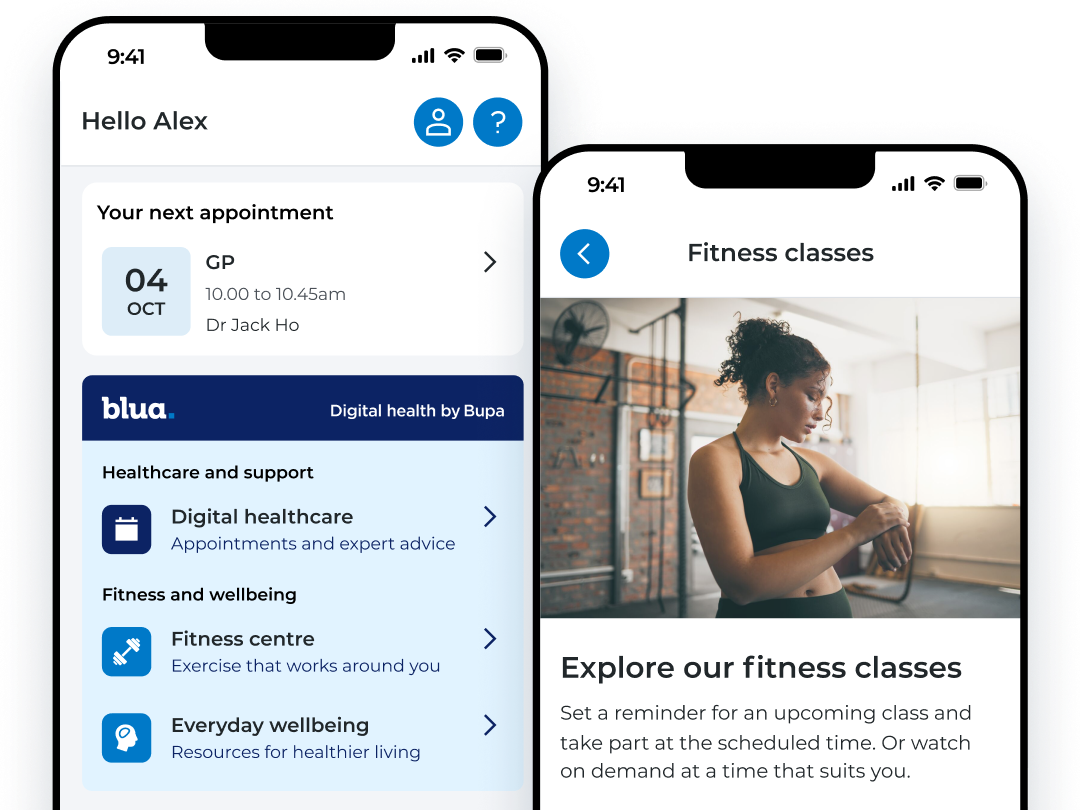
Get the My Bupa app
A digital account provides a convenient way for your people to get the support they need. Personalised to your employees level of cover, they can access a range of resources and services available to them.
To sign into the My Bupa app, your employees can use their existing Bupa account, or by creating a new digital account.
Scan the QR code with your phone camera to download the app.



 Member help and support