





Neurodiversity

Supporting neurodiversity in the workplace
To help everyone perform at their best, it’s important to understand how workplaces might affect neurodivergent people.
In this guide, we’ll explain what neurodiversity is, the value of neurodiversity in the workplace and how you can support neurodivergent employees at work.
Neurodiversity in the workplace guides
What is neurodiversity and the benefits of neurodiversity in the workplace
Learn more about what neurodiversity is, and how to have conversations with neurodivergent employees.

How you can support neurodiversity in the workplace
Learn about strategies for supporting neurodivergent employees and how to communicate those strategies.

Why a neuroinclusive workplace is one that works for everyone
Read our article on how to design workplaces that are accessible to everyone, no matter their ability.
Tools for managers to support neurodiversity

Manager’s checklist: Supporting conversations around neurodiversity
Use this checklist to facilitate better, open discussions with your employees. It’s designed to help you have better conversations about neurodiversity, so people feel safe and supported.
Team worksheet: The Wheel of Balance
Use this printable worksheet to understand how supported your employees feel at work. It helps to identify different areas where they might need more support.
Tailoring performance management for talent

In today’s modern workplace, it’s important to manage and assess performance fairly. As a manager, you should try to consider different ways of working that could result from neurodivergence.
We've teamed up with WorkNest, a provider of small business HR support, for tips on managing neurodivergent employees' goals and performance.
More about performance management
Watch our videos for managers
Supporting neurodiversity in the workplace
In this video, we explore practical tools and expert insights designed to help managers better support neurodiverse employees in the workplace.
Hi, I'm Dr Ravi Lukha, Medical Director at Bupa and welcome to this Academy module where today we're discussing the topic of Neurodiversity.
Neurodiversity refers to the way in which brain function and behavioural traits can vary from person to person.
Just as you might be born right-handed or have green eyes, how your brain works and where you sit on the cognitive spectrum will be unique to you.
The majority of people may be described as neurotypical since they fall within the expected range, whereas others who fall outside that range due to conditions such as autism, ADHD, and dyslexia could be described as neurodivergent.
In the UK, it's estimated that around 15% of people are neurodivergent, affecting how they both interpret and process information.
Given the wide range of neurodivergent conditions and the fact that they can affect different people in different ways, it's perhaps not surprising that less than half of managers say they feel capable and confident when it comes to supporting neurodivergent individuals at work.
However, as a manager, it's important to get to know your team and understand what they need and when in order to help them overcome certain challenges and reach their full potential at work.
I'm now joined by two Bupa colleagues to discuss their lived experiences as both a team member and line manager around dealing with neurodiversity in the workplace.
Rob, Lou, thanks for joining us today.
Hi.
Hello.
So if we start with yourself, Rob.
Firstly, can you tell us about your neurodivergence, when it was diagnosed and how it affects you in the workplace?
Yeah.
So, I've always had all of my neurodivergences as obviously I was born with them, but they were actually diagnosed in stages.
So first of all, I was diagnosed with dyslexia around about nine or 10 years old in primary school.
Moving on throughout high school, I thought I only had dyslexia.
And it was only during a disabled student allowance assessment that it was actually sort of raised that I also had or might have, dysgraphia, ADD at the time, but it's now known as inattentive ADHD, and a little bit of dyspraxia.
But because that was where the conversation ended, no one mentioned about getting extra support, so it's only over the past few years in my working life that I've had a community of other neurodiverse people around me that I’ve started to actually learn a lot more about myself as well, and learn how the dyslexia and the inattentive ADHD actually combine and things that I've thought were just caused by one actually is caused by a combination.
And that's been really, really transformative.
Understanding more about myself and my neurodiversity.
Yeah, it's great to hear that kind of journey of self-discovery linked to your diagnosis.
And I think it's really common with neurodiversity that actually a diagnosis is a great thing.
It's a freeing thing to understand more about yourself.
Yeah, absolutely.
So Rob's touched there on his neurodivergence.
Can you tell me a bit about from a line manager's perspective, how you use that to support him in the workplace?
I think we started with just really open communication, and I had this kind of eagerness to learn about him, to make sure that we could work together, to make sure that he could thrive at work.
And as Rob's described, he's been really open about his neurodiversity.
He's part of the community in the workplace.
So I was aware that he had a certain level of comfort in talking about it.
So I just went with that.
I suppose being cautious and careful of making sure that I'm not overstepping the mark and making sure I'm not being insensitive in any way.
But, I hope that that's been successful.
Thanks, Lou, and what I love from doing all these conversations is that, people such as yourself in the line managing capacity, think of the person first and are really inquisitive to learn more about that individual and their condition, whether in this case neurodiversity, and tailor the workplace adjustments to them.
Rob, having the confidence to speak to your line manager about your neurodiversity is one thing, but getting to a stage where you're able to talk to them about exactly what you need is another.
Can you tell me a little bit about that journey for you?
Yeah.
So I wasn't always this confident opening up about my neurodiversity.
For most of my life, I've been doing something called masking, which is where you sort of hide the fact that you actually have any kind of neurodiversity.
The one thing you really don't want is to be treated differently.
And so I was always hiding from that fact through all of my education and all of my working life as well, until I'm doing the role I'm in now.
And so having the actual confidence to open up to anyone, not just a manager about this, even friends, is really, really challenging.
It's really, really tough.
I really commend anyone that is actually able to talk about it openly.
Because it is a challenge to, you know, admit that I do need support.
I do need help.
It doesn't make me any less.
I just need that little extra, and it's not preferential or special treatment or anything like that.
And when you are able to finally start to feel comfortable talking about it, you realise there was nothing really to be worried about.
It was nothing to be shy about.
You're not going to get ridiculed.
No one's going to belittle you.
You are going to get, or you should be able to get the support that you need to move forward to be your best.
If you're using 10% of your ability, just hiding the fact, imagine what you can be doing with that extra 10%.
When you start to understand that and you start to talk about these things, you can actually collaborate with people and learn different ways of working as well.
I've tried 100 different things, but everybody's different.
Everybody's neurodiversity is different.
It affects everyone in different ways.
So although I've tried 100 different things, only 10 things work for me.
You know, I come into the office a little bit more than I need to, and everybody else does because I focus better in the office.
I have noise-cancelling headphones to block out the world around me, so I can just focus on the thing that I need to focus on.
You know, using a text-to-speech software so things are read to me.
You know, before, before I started feeling comfortable at opening up, I used to think, 'Oh, I can't use that, it's lazy,' but it's not lazy.
It's just understanding how your brain works.
It's understanding how you work and adapting to that.
A really important message and I think, you know, giving your story, Rob, really also helps destigmatise neurodiversity, and especially how we can help in the workplace.
Thank you.
And Lou, as Rob's line manager, you must've experienced first-hand how those small adjustments can have a huge impact for someone like Rob working with neurodiversity in the workplace.
So, yeah, working with Rob, from the off, we've both had this desire to make sure that we're working together really effectively.
And Rob's got an array of strengths that I was really keen to tap into and optimise.
So one of Rob's key strengths is his tenacity.
He is fantastic at working to a deadline.
He's a great asset to the team, and when we've got a deadline in place he is unstoppable.
So we switched some project responsibilities around within the team, and Rob then took over a project that has a monthly rhythm of activity.
It's fixed deadline every month.
There's a lot of chasing to do, stakeholder management and gathering of information.
But since taking on this task, Rob has soared.
Things are on time and delivered.
He really got full ownership of the end-to-end project.
And it's been a really good move for the team.
And he's a real asset to the team because he's got full ownership of this project.
Thanks, Lou, I think that's a fantastic example for any line manager about how an adjustment can unleash people like Rob's potential in the workplace.
Yeah.
And, Rob, to round off the conversation, what would you say to somebody watching this who is neurodiverse, who doesn't know how to kind of open up at work and talk about it?
Sure.
So I think it's first of all really important just to be kind to yourself.
You can often put a lot of pressure on yourself from having a neurodiversity and having all the challenges that come with that and feeling like you have to be better than yourself to help develop the ways you work.
The best thing to do is really speak to people, and bounce off people as well.
It doesn't have to be a line manager, although that can be a really, really positive thing as well, because they can see things that you might not be able to.
Yeah, it's really important as well to understand that your company has already invested so much into you.
They're not going to stop now just because you're asking for help.
You being your best helps the company to be at their best, helps them to work at their best.
So why would they not want you to ask for help?
There is that worry that by asking for help, you know, things may change.
You may be looked down on.
But often it's not like that.
But when you do take that step, I think you will find that it is beneficial for you.
Yeah.
And it's a great message.
And what I love about your story, Rob, is you've really used your neurodiversity to learn more about yourself.
And doing that allows you to tell your line manager to be able to say what makes me tick or work best in the workplace.
So in that vein, Lou, same question really.
For somebody that might, you know, potentially struggle to open up about their, neurodiverse condition, what advice would you give to line managers around that?
I think there's a ground base of solid research that you can do.
I just mean Google and we've got some great resources.
We've got a great Neurodiversity Line Managers' Guide and a great Neurodiversity page with a raft of information on there.
But then I think it's about going straight to the person and getting to know them directly.
So, you know, I'm fully aware that not everybody is going to be as comfortable as Rob is.
Rob has already had a massive journey before we've had our working relationship.
So you know there's going to be some more cautiousness, maybe from others.
So as a line manager, you need to be aware of that and maybe more sensitive to those situations.
So opening up the conversation to let them know that you're there but waiting for them to be ready.
It might feel quite daunting thinking that you've got to understand somebody's brain chemistry and understand the wide array of neurodiverse conditions that there are, but I think it's just important to think about the actual person, bring it back to your team member and trying to understand them as a person and how they tick and how and they are, how they can optimise their skills in the workplace.
It's best for them to come to you, to ask for help, for support and, and bounce off them.
Try not to come with answers.
Come with an open mind.
Yeah, that would be the best thing.
And as well as the grounding of research that you can do online, you know, speak to HR, speak to People Services for that support and that kind of initial conversation.
But then, yeah, bring it back to the person.
Yeah.
Great.
And I think I've heard that in all of these conversations about how it's OK not to have all the answers.
Exactly.
Yeah.
We don't have to come with, X, Y, Z to say, 'Do this, do that.'
It's not how it works.
Yeah.
It's a process.
And you have to listen to the individual.
Lou.
Rob, thanks so much for joining us today, Rob, for talking about your story and your neurodiversity.
It's been really great to hear your journey and all the kind of adjustments you've made, both at home and in the workplace as well.
Thank you.
Thank you, Ravi.
Thank you for watching this Academy module on Neurodiversity.
Today, we've heard one person's story, but it's important to remember that everyone's experience of neurodiversity is different.
Line managers will never immediately have all the answers.
But the most important thing is to create an inclusive culture where employees feel supported and able to express their needs, as only then will you be able to work with them to create a more inclusive and productive work environment.
For more tools and support for dealing with health and wellbeing issues in the workplace, head to Bupa's Workplace Academy webpage at www.bupa.co.uk/academy.
You can access our online hub, providing both line managers and team members with practical and emotional support to educate, build resilience and help navigate neurodiversity together.
Thanks again for watching.
Powering your small business with a more neuroinclusive workforce
Our experts explore how to build a neuroinclusive health and wellbeing strategy to support your people. This can help solve the biggest challenges SME owners tell us about: finding good people, staying resilient, and getting more done.
I do absolutely believe that if you can attract these people into your organisation, they can be game-changing.
We know the statistics are very high for neurodivergent people jumping jobs, and that I don't think that's because they're not very good at their jobs.
I think it's because the environment's not right.
This is the culture you should want to build.
So for SMEs, for us to have that competitive edge, it's really important that we start with neuroinclusion, because actually it benefits everybody.
Hello and welcome to the new episode of the Bupa Small Business Academy, where today we'll be discussing how to power your small business with a more neuroinclusive workforce.
I'm Holly Tucker, founder of Notonthehighstreet and Holly & Co,and today I'm joined by Jodie Hill, founder of Thrive Law, who educate and empower employers to both build and support high performing, inclusive teams.
Welcome, Jodie.
It's wonderful to see you.
Thank you so much for having me here today.
Wonderful.
Jodie, as someone who is neurodivergent myself, this is a conversation that's very close to my heart.
And I know that is the case for you, too.
You founded a small business focusing on exactly that.
So can you start by telling us about the work Thrive Law does, but also why this is a conversation for SME owners and why they should really sit up and pay attention to this.
Absolutely.
So at Thrive Law, we support organisations not just with the legal side of neuroinclusion, so things like making contracts and processes and policies more accessible and inclusive.
We also help with training and strategy and support around the entire employee lifecycle, the environment where people work, thinking about the lighting, the sound, all of those different things that often organisations don't think about.
And it's those little things that if we make those small changes in that organisation, often the individuals who are neurodivergent feel as though they belong and that they're less likely to need things like reasonable adjustments.
So understanding at all levels how we all operate differently
and the differences that we can bring to an organisation that's often missed if a workplace is not neuroinclusive.
So whether that's through recruitment, retention, or whether it's about developing people into the right roles.
That can be missed if we're not having that neuroinclusion lens.
So for SMEs, for us to have that competitive edge, it's really important that we start with neuroinclusion, because actually it benefits everybody.
Today we'll be discussing how a more neuroinclusive health and wellbeing strategy can help solve what SME owners have told us are their three biggest concerns and these are talent, resilience and productivity.
But first, Jodie, I think it would be really useful to explain exactly what we mean when we use terms such as neurodiversity or neuroinclusivity.
Of course, neurodiversity, I'll start with that one.
Neurodiversity is about understanding how our brains operate differently and how some people will diverge from what we call the neurotypical way of thinking.
So there's a range of what would be classed as neurotypical, and then those people who diverge from that would be classed as neurodivergent.
So that might be your ADHDers your autistic people, people who are dyspraxic, dyslexic.
So when we think about neurodiversity, it's looking at that spectrum and celebrating the unique skill set that those people bring.
And with neuroinclusivity, what we're doing there is really focusing on creating an environment that allows those people who diverge from the norms, the neurodivergent individuals, to feel as though they belong in an environment in the workplace that is suitable for them.
The analogy that I like to use is the difference between a Mac and a PC.
So we know that a Mac and a PC have different operating systems.
Right? Now, if I was to download something that’s supposed to go on my PC onto my Mac, a piece of software, and it doesn't work, am I going to say that the Mac is broken?
No.
OK.
But we so often say that neurodivergent people are broken because they don't fit into the system.
They don't fit into the environment.
So what do we do? We change the environment and we put it in the right system.
And if we think of our brains as human operating systems and actually they have different needs, they have different environmental needs, different processing and communication needs.
What we find is that we can actually attract, first of all, neurodivergent talent, because yes, we're more aware of that, but also we can retain them
and put them into a world where they can thrive rather than simply survive, which we see in so many organisations.
That is a really good analogy.
I've never heard anything like it.
It really is clear that neither one is right or wrong or broken.
It's just two different ways of communicating, and you've just got to learn how to do that.
You spoke about talent, and that's something I want to pick up with you, because there's a couple statistics to put this conversation into context.
At least 1 in 7 people in the UK are neurodivergent, around 15% of the population.
However, just 31% of neurodivergent people are in employment.
That's a huge amount of untapped potential.
So it's clear to see that small businesses who don't have a neuroinclusive culture might be just shutting themselves off from a significant chunk of that talent pool.
Absolutely.
We do see, actually, especially with SMEs, that they don't think about the recruitment process.
So when you're saying there's a pool of people out there that are potentially not accessible, the reason for that can often be as simple as what is the application process for that role?
What language do you use in the advert? It has to be 'a great communicator'.
Most neurodivergent people might think they're not a good communicator because they've been told for many years that they're rubbish at communicating.
They're not rubbish, they're just different.
So it's thinking about, as an SME, how can you make those tweaks to make your job roles more attractive to a neurodivergent individual?
And then once you've got them in the workplace, it's going, 'How can I get, how can I understand them better?' So that, you know, if they're turning up late and appear to be fidgeting in a meeting and not paying attention, actually, are they not interested or are they neurodivergent?
And is there something like a fidget toy we can introduce, or is there a different environment that we can put them in where they feel more at ease?
So there are small changes that we can make.
And as SMEs, we can make those now. We can make them today, which is really powerful.
So when I launched Thrive, I said, you know what, I'm going to interview differently.
I'm going to let people do a video instead of writing.
I'm going to let them present something or do something in a different way.
So it's not a formulaic interview where it's almost military, which it can feel like.
You feel like you're getting ambushed.
So making adjustments in the process, but also just making it more inclusive anyway.
Yeah, I love that.
And this fidget toy that you've got here.
What does that do?
So for me this really helps me when I'm processing to sit still a bit more.
Because I'm ADHD, my hyperactivity means that I have a lot of energy and I can become quite, I can almost shake because of the amount of energy in my body.
So it'll either be, I don't know, like a tapping foot or I'm kind of really fidgety.
So if I'm in meetings or I'm trying to focus, It helps me to focus because I can fidget in one area.
Right?
So it's helping me to process.
And for autistic people, it can also be quite soothing.
So if they're in a particularly stressful environment, using fidget toys can help them to feel more regulated from an emotional dysregulation perspective.
That is amazing.
I've never seen one.
Carrying on with talent as the subject.
Is it worth debunking the myth that perhaps still lingers around, neurodiversity being, I suppose some people might say, a weakness that limits people's performance, I suppose?
Neurodivergent people's ceiling is no lower than anyone else's.
It's simply a matter of understanding how to get the best out of them.
It's like the square peg, round hole analogy.
Yes, absolutely.
And I'd like to share my own personal story here, because when I set Thrive up the reason that I set it up was because I was in an environment that was not neuroinclusive and didn't cater for my needs.
And actually, I wasn't actually diagnosed at that point, but undiagnosed, the symptoms are still there, right?
So what happened was I actually had a mental breakdown I left my job, nearly left the profession because I genuinely believed I was rubbish at my job.
I couldn't do it.
And actually it was the environment that was wrong.
It was the practices that were wrong.
So after I left, I decided actually the only thing I know how to do is be a lawyer.
So I continued doing that as a consultant and realised there was a huge gap in the market for a neuroinclusive law firm and a law firm that really embeds wellbeing to core of its practices.
So I set that up.
Now, had I not have done that, I could have left the profession.
And I see so many people that do that.
And if that workplace had just made a more neuroinclusive workplace, even just listened, even just asked the right questions at the right time, that would have had a huge impact.
And I think so often we forget that it's the environment that's wrong, not the person.
The second point is resilience.
So how SMEs can better support and protect their neurodivergent employees that do become part of their business.
So a couple more stats just to give context.
The 2025 Neurodiversity Index Report found that 41% of neurodivergent employees feel affected by challenges in the workplace most days, while 51% have had time off because of their neurodivergence.
So I find those numbers quite shocking enough, actually.
But SMEs in particular have work to do because another statistic, the CIPD’s 2024 Neuroinclusion at Work Report found that small businesses were least likely to say neuroinclusion is an area of focus for their business compared to a medium and a larger enterprise.
So it's very well that we're now talking about talent, but small business owners, clearly they need to do more. When you look at the statistics, we know that and particularly those people who are autistic and ADHD, they are more susceptible to burnout.
And that is because of how they process the world, effectively.
There is so much more exhaustion.
So much more stress, so much more pressure.
Everything is more difficult. So when we change the environment, we're reducing that pressure. We're reducing the stress. It's not getting rid of it, but it's making it a bit more tolerable.
And in some situations it can really make a huge difference to people.
I mean, look at me for an example.
I don't struggle with my mental health anymore.
Right.
And I had, for 10 years, panic attacks every day.
I was struggling constantly.
Now I'm not going to lie, I do teeter on the edge of burnout at times, but that's because I love what I do and end up over-working.
But actually, whereas before, it was more anxiety over everything in my life like generalised anxiety, and that was because my needs weren’t met as a neurodivergent person.
So I think there's a real, importance here when we think about the link between mental health, burnout and neurodivergence.
And if we don't deal with neurodivergence, it can escalate into so many other areas of our life and the organisation.
And so having those conversations as early as possible helps people want to stop going off sick.
Because they feel actually, I'm heard, I'm supported, I'm valued.
And actually the disadvantage can be significantly reduced, as a result, that they face in the workplace.
But also it stops people from leaving.
Because if people get to a certain point where adjustments aren't made, then they will just leave and go somewhere else.
And we know that the statistics are very high for neurodivergent people jumping jobs, and I don't think that's because they're not very good at their job.
I think it's because the environment's not right.
So if we create an open culture that really promotes psychological safety, you know, leaders being vulnerable in sharing their own neurodivergence, being clear as to how you help people with neurodivergence, what you do as an organisation to help.
I think that's really powerful.
And none of that costs any money.
It's all about sharing stories and just really looking at your processes.
Are they clear?
If someone needs an adjustment, who do they speak to?
What can they get?
And I think that clarity and that transparency is really important when SMEs look to tackle this issue in the workplace and it then really creates a neuroinclusive workplace where people will just ask for help.
They're more likely to come to you with a challenge rather than let it get to a point where they're about to go.
Yeah, I totally agree.
Tell me, what do you mean when you say a climate of psychological safety?
So for me, psychological safety, actually, if I go back to when I set my own law firm up I wanted to create a space that was psychologically safe for me.
So that was the environment, the way that I worked, the kind of clients I worked with, you know, the hours that I worked.
And really, for me, it was about creating an environment where I felt safe and then attracting people who shared those values.
And when you think about it, as a founder, we can do that.
But organisations who employ people, those individuals don't get to choose that.
So it's our duty as the SME owners to make that psychological safe place through being vulnerable as a leader and really encouraging people to speak up if they need help or if they make mistakes, not judging them.
It's that whole cycle of vulnerability within the workplace.
But to the point that people feel as though they're safe, they won't be judged.
So, you know, when we think about neurodivergence, if they disclose that, they're not going to be ridiculed, they’re going to be supported.
So that's the relevance of it in this particular context.
And for me, that's the crux of neuroinclusion.
If we don't have psychological safety, we don't have neuroinclusion.
Absolutely.
The last point we need to talk about is productivity.
There's this misconception that equity, diversity and inclusion initiatives are for larger corporate companies with bigger budgets and dedicated HR teams.
However, far from eating into the bottom lines of SMEs, investment in EDI has been proven, hasn't it, to have the opposite effect?
In fact, diverse teams are 35% more likely to outperform competitors.
So Jodie, as we said at the very start of this conversation, making small businesses more neuroinclusive isn't just nice to have or the tick-box that we spoke about.
It's a must-have in order to maximise productivity and performance.
What we're really looking at here is how do we get to know people better?
How do we build that human connection?
How do we get to understand and really properly listen to the people that we work with?
And as SMEs that's a bit of a superpower because we mostly know everybody that we work with.
You can really get to know them.
I think that, for me, is the beauty of running an SME is I know so much about all of my team, whether it's neurodivergence or their religion or their children.
Whatever it is, it's really about understanding them to the point that if they ever need something, they will ask you, and particularly when it comes to neurodivergence, because there's a lot of shame attached to being neurodivergent.
There's a lot of stigma around ADHD, autism, overdiagnosis, there's a lot of stuff in the media.
So people feel as though they don't want to talk about it in the workplace because they won't be believed.
And if they're on a waiting list, they haven't got a diagnosis.
Yeah.
Then they feel as though they're not protected and they are.
So, for the employers listening, people don't need a diagnosis to be eligible for reasonable adjustments.
They just need to meet the definition of disability, which most of them probably will do.
So my message to employers, is don't focus on the diagnosis but focus on what are they struggling with?
What are they good at?
And then lean into the strengths and then support with the challenges.
As we said, this is a human initiative rather than actually having to do something.
This is the culture you should want to build.
And when we talk about that 15% of the population being neurodivergent, tell me about, actually, what that incredible pool of potentially untapped talent could look like for your business.
It's a bit like you and me.
You know, a lot of people go on to found their own business for this exact reason.
But essentially what it is, is that those individuals tend to think outside the box.
They're more creative.
They bring a completely different perspective, which the other percentage of people are just not bringing, because everyone's thinking and acting in a very similar way.
So even though it sounds like a small percentage, one extra neurodivergent person can have a significant impact on your innovation.
And we know right now SMEs need to innovate more.
They need to be more creative.
And this is a really good opportunity to really, if you create those inclusive environments, to attract those people and retain them in your organisation for that competitive edge.
If I look at some of my best talent that I have, they're all neurodivergent.
I'm neurodivergent myself.
And so I do absolutely believe that if you can attract these people into your organisation, they can be game-changing.
But that's been fascinating.
Thank you so much for talking to us.
Thank you so much for having me.
I've absolutely loved it.
That conversation was full of fascinating real-world examples.
But what can SME owners do more generally to make their small businesses more inclusive?
To tell us more, here's Hussain Kayani from WorkNest.
Hello, I’m Hussain Kayani, a Head of Team and Solicitor at WorkNest.
If you're looking to make your SME more neuroinclusive, here are three simple steps you can take right away.
First up, review your recruitment practices.
Start by simplifying job adverts and descriptions.
Use clear, direct language and focus on the skills that truly matter for the role.
Where possible, offer alternative ways for candidates to apply or demonstrate their abilities, such as skill-based assessments instead of standard interviews, if appropriate for the role.
Next up, adjust the working environment.
Neurodivergent individuals may thrive in different settings.
If possible, consider quiet workspaces, noise-cancelling headphones or flexible working hours.
Small adjustments like these can make a world of difference and can help employees feel comfortable and able to perform at their best.
And lastly, encourage open communication.
This, in my view, is by far the most important.
Make it clear that you welcome conversations about individual needs and preferences.
Provide training for your teams on neurodiversity awareness and ensure managers are equipped to support adjustments or accommodations.
Remember, creating a neuroinclusive workplace isn't just about compliance, it's about unlocking potential, fostering innovation and attracting incredible talent.
By embracing these three simple steps, you’ll help your small business and everyone in it perform at their best.
I'm now joined by Victoria Fariña, a Senior CBT Therapist from HelloSelf, a Bupa partner who provide an online platform for personalised mental health care and neurodiversity coaching.
Welcome, Victoria.
It's great to be here.
Thanks for having me.
Victoria, neurodiversity can understandably be a really daunting topic to approach given different conditions can affect different people in different ways.
What would you advise to an SME founder who feel they lack, I suppose, the expertise to talk about something like neurodiversity in the workplace?
I think first of all, it's really important to remember that you don't have to be an expert in this to have those conversations.
So I think it's all about asking questions, being curious and just listening to the people that you have in front of you.
Recognising that people are individual can go really, really long way.
Everybody is different no matter their diagnosis.
Remembering that will get you really, really far.
For those watching who perhaps have limited experience on this topic, how does neurodiversity tend to show up in the workplace?
And what are some of the most common conditions and symptoms or challenges that they pose?
So, neurodiversity is really an umbrella term that refers to lots of different conditions such as autism, ADHD, dyslexia, dyspraxia, dyscalculia, dysgraphia, and also Tourette's as well.
Each diagnosis has its own individual kind of theme.
So for instance ADHD really is about differences in attention and concentration.
And then autism really is about differences in social communication, typically across, the kind of neurodiversity spectrum.
What you would expect to see is that executive function is impacted in some way.
What that means is that could translate into, for example, somebody in the workplace who maybe has ADHD or another diagnosis who maybe struggles to get to meetings on time, but actually they have really great strengths within thriving in chaos.
And when things get really busy and deadlines are hitting, they are nailing it completely.
Then you might have somebody who is the complete opposite of that, so is early and on time to everything, but then struggles when things need to be a bit more flexible, so struggles to adapt if meetings are cancelled or moved.
So as you can see, those things can play out in completely different ways, almost opposites in the workplace setting, which is why it's important to just ask people, how they feel they're impacted, what their strengths are and what their challenges are, and support them through that.
While being proactive and creating a neuroinclusive culture can help mitigate a lot of these issues, how can SME founders help neurodivergent employees navigate challenges that they may still be facing in the workplace, despite all of the best efforts?
So for me, communication really is key here.
It's at the heart of everything.
So you want to build that trust with your employees.
You want to have that clear two-way communication.
And you want to make sure really that there are clear boundaries within the workplace, but they're not completely rigid and there's some flexibility built in when needed.
I think it's really important to recognise the kinds of things, kinds of examples of strategies that can be used within the workplace.
So for example, there could be technology based solutions used for people with dyslexia potentially.
It may be that somebody with ADHD might struggle with the typical work structure of going from a 9 to 5 with set breaks.
They may prefer to work 10 hours on one day and six on another.
They may prefer shorter breaks more regularly, or they may prefer one longer break.
It's just about asking them what they need.
This might also vary from day to day.
So it's really, really important to have that trust with your employees.
Because if you trust that they're going to deliver that job and help the business and help to make it more productive, then you can rest easy that they are doing the work they need to do in the way that they need to do it.
Yeah.
And I think you just, touched on something that's really important as part of this, which is setting clear goals.
You know, as an employer, if I set clear goals that I need to have this and this met by this time and making sure that we're very, very clear on that, ultimately, then, the way that individual delivers that, and if that means that I'm creating a culture where they can look at the hours that they spend working or what's going to get the best out of them, it's setting them up to succeed, isn't it?
Absolutely, absolutely.
Because as the employer, you're going to want to boost productivity, have that supportive culture.
The employee just wants to feel heard.
They want to feel valued, and they want to be trusted to deliver that job in the way that they know best.
It's about making the expectations clear.
And if you need to deviate from that, having clear communication about it so you can really build that trust.
And trust is the word, isn't it?
Is that what is underpinning all of this?
Building that trust that someone can feel that they can be exactly who they need to be in order to deliver the job?
Absolutely.
Because then you're going to see that they can use their strengths to both their advantage and the business's advantage.
And that's where you'll see them excel.
And that's what we want isn't it?
On both fronts.
A combination of increased awareness and lengthy waiting lists for an official diagnosis means there's a growing number of people who self-identify as neurodivergent.
Should an employer's approach be any different when it comes to supporting these people, as opposed to those with a formal diagnosis?
I find this very interesting.
I think it's a really good question because, the way that I see it is each person is the expert in their own experience.
So nobody can profess to live their life day to day or see the world through their eyes.
So we have to trust each individual if they feel that they are neurodiverse in some way, but they haven't received a diagnosis.
I would support them with exactly the same level of need, as you would somebody with that formal diagnosis.
So for me, it's really about making sure that they have access to that support.
You might need to recognise that there would be some more trial and error there, because without a formal diagnostic report, they might not be so aware of their strengths and differences.
So it might take a little bit of time to get it right.
But I would offer the same level of support.
People can be waiting so long for a diagnosis that you're better to put that support in place sooner rather than waiting.
Absolutely.
And Bupa have recently launched the SME Neurodiversity Workplace Support Package, which is basically designed to help your workforce understand their diagnosis and perform, just as we've been saying here, at their best.
Can you tell me a little bit more about that?
So recently, the SME Neurodiversity Workplace Support Package has been launched in partnership with HelloSelf so that people can have post assessment support from specialist clinicians to help employees reach their full potential.
Other Bupa resources include an online Neurodiversity hub that includes lots of articles and videos for line managers and individuals to use as well.
That's so helpful.
And then there's a couple of other things that we always reference on the Bupa Small Business Academy, which is Growth+ it's available to Bupa’s SME customers and it's designed to support with all HR or health and wellbeing needs.
And also Bupa’s Workplace Wellbeing Hub where you'll find practical guidance and resources to support your team, including line manager guides.
Absolutely, to help people feel more confident to broach the topic there's a lot out there that can really help and Bupa have got lots of great resources for people to use.
Haven't they?
Victoria, I really enjoyed our conversation.
Thank you.
It's been a pleasure to be here.
We've discussed what SME owners can do to better support neurodivergent employees, and the range of benefits that this can bring to that business, but what are the obligations and the legal risks of not fulfilling these?
To tell us more, here's Hussain Kayani from WorkNest.
Hello again.
Let's discuss an SME owner's legal risks and obligations with regards to neurodiversity in the workplace.
Under the Equality Act 2010, neurodiverse conditions such as autism, ADHD, dyslexia, or dyspraxia are often classed as disabilities.
This means by law, employers must actively consider and implement reasonable adjustments to support neurodivergent staff.
These could include altered working hours, quiet workspaces, clearer communication or assistive technology.
It's not enough to simply wait for employees to request support.
You have a legal duty to proactively address any potential barriers they may face at work.
For example, it would be discriminatory to subject a neurodivergent employee to the same performance management process as other employees without first considering what reasonable adjustments could be implemented to assist them.
This would typically start with an Occupational Health referral before working with the employee to mutually agree and implement the recommended reasonable adjustments, as far as reasonably practicable.
Ignoring these responsibilities carries significant legal risks.
Failing to make reasonable adjustments, or treating someone unfairly because of their neurodivergence can lead to discrimination claims at an employment tribunal where there is no upper limit in compensation.
It can also damage your business' reputation and make it harder to attract and retain talented people.
So keep communication open, seek regular feedback and make reasonable adjustments wherever possible.
By doing so, you create a workplace where neurodivergent talent can truly flourish while meeting your legal obligations and reducing risk.
And that's all we've got time for today.
Thank you, Jodie and Victoria, for a fascinating conversation.
It's been very personal for me.
I've learned so much and thoroughly enjoyed it.
I hope this conversation has also been useful for you in understanding how creating a more neuroinclusive culture can be instrumental in powering your small business.
Take care and we'll see you next time.
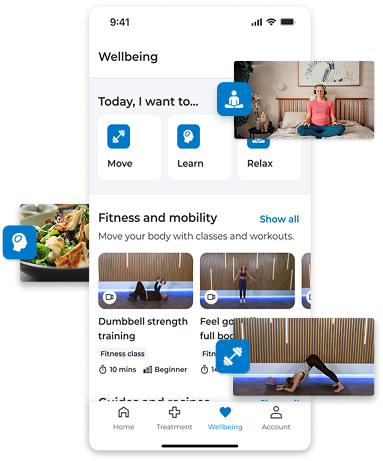
Find fitness classes, meditations, and expert guides in your My Bupa app
Visit the Wellbeing and Fitness area of the My Bupa to access content like:
- Meditation: ‘Focus your thoughts’ or ‘Begin your day with calm’
- Fitness class: ‘Yoga to love your body’
- Expert guide: ‘Low-effort healthy dishes’
You can download the My Bupa app or sign in online.
Scan the QR code with your phone camera to download the app.


About HelloSelf
We’ve partnered with HelloSelf, an online psychological therapy practice providing clinically proven therapies to adults and young people.
They are led by skilled and compassionate clinicians and have a large team of Clinical and Counselling Psychologists and CBT Therapists.
