

Physiotherapy for lower back pain
Physiotherapy is a treatment that helps to improve the movement and function of your body. Different physiotherapy techniques can help to ease lower back pain, restore normal movement, and lower the risk of your pain returning. Physiotherapists can also offer advice on how to look after your back, helping to prevent future problems.
About physiotherapy for lower back pain
Physiotherapists focus on restoring movement and function to your whole body after an illness or injury. They look at:
- how well your nerves, muscles, and bones are working
- whether treatments such as exercise and manual therapies are likely to help your lower back pain
Your physiotherapist will encourage you to take an active role in your rehabilitation, rather than relying only on your physiotherapist’s treatments at your appointments.
Find a physiotherapist
Your GP may refer you to a physiotherapist through the NHS, or you may be able to book an NHS physiotherapist yourself. This is called self-referral. Ask your GP surgery if this is available in your area.
You can also have private physiotherapy. You can search online directories to find a local private physiotherapist. If you have private health insurance, check what your insurer covers before you book an appointment.
If you book your own physiotherapist, make sure they’re registered with the Health & Care Professions Council (HCPC). This means they’ve completed approved standards of training and follow the HCPC rules of professional conduct.
Physiotherapy procedure
When you first see a physiotherapist, they’ll ask you about:
- your symptoms
- when these started
- what makes them better or worse
- what triggers them
Your physiotherapist will also ask about:
- your medical history
- any medical conditions you have
- your lifestyle
- your work environment
- any medicines you take
Next, your physiotherapist will examine you to see:
- how easily you move
- how well your back is working
- how well your nerves are working, if necessary
You may be asked to remove some clothes so your physiotherapist can see and feel your back. You can ask for a chaperone, or you are welcome to bring someone with you to the appointment. The physiotherapist will explain what they’re going to do and why.
Your physiotherapist will explain:
- the benefits of physiotherapy
- the treatment they recommend
- how the treatment may help your lower back pain
- any potential risks of having physiotherapy treatment
If you’re unsure about anything, don’t be afraid to ask. It’s important that you fully understand what your physiotherapist recommends, because they’ll ask you to give your consent before going ahead with treatment.
Your GP or physiotherapist may recommend physiotherapy as part of a treatment package that includes:
- hands-on manual therapy
- an exercise programme
- painkillers
- psychological support
Having a combination of treatments may give you the best chance of easing your lower back pain. Your physiotherapist will also help you to understand what’s causing your lower back pain so you can take steps to manage it.
At the end of your first session, your physiotherapist will usually tell you how many sessions you’ll need and how often. This will depend on how lower back pain is affecting you and how you’re managing your symptoms. You may just need a one-off consultation, or your therapist may recommend a course of physiotherapy appointments over a few months.
Exercise and staying active
Keeping active is the best thing for lower back pain. If you’re employed and pain is affecting your work, it can help you return to work faster. You’re also less likely to have long-term problems or get lower back pain again. Even if you’ve had lower back pain for some time, an exercise programme with a physiotherapist can ease your symptoms and get you moving again.
Exercises can help to improve flexibility, mobility, and strength in your lower back. Some people find it easier to exercise with other people, so your GP or physiotherapist may suggest you join a group exercise programme.
A physiotherapist can advise you on exactly what exercises are right for you, and how to do them. Below is an overview of the different types of exercise that physiotherapists usually recommend.
Aerobic exercise
This is any exercise that gets you moving and increases your heart rate. Aerobic exercise can help with any stiffness and keep you mobile. It will also help to manage your weight and can give your mental wellbeing a boost.
Your physiotherapist may recommend you start with low-impact aerobic exercises, such as walking, swimming, and using exercise bikes and step machines. They’ll encourage you to increase your activity as your strength and mobility improve. They’ll probably advise you to exercise for around 30 minutes, at least 5 times a week, but their recommendations will be specific to you.
Stretching exercises
Stretching improves flexibility in your spine and reduces tension in the muscles that support your spine. You usually do these exercises every day. A typical stretching exercise is to lie on your back with your knees bent and your feet on the bed. Then let your legs gently roll to the left-hand side and then over to the right-hand side. Ask your physiotherapist about other stretching exercises you can do.
Strengthening exercises
Physiotherapy exercises for lower back pain to strengthen core muscles will often be included as part of an exercise programme. Your core muscles are the tummy (abdominal) muscles around your stomach, the muscles in your back, the buttock (gluteal) muscles, and those around your pelvis.
Manual therapies
Your physiotherapist may suggest manual (hands-on) techniques to treat your lower back pain. This will always be alongside an exercise programme.
- Mobilisation. Your physiotherapist will use slow, gentle, rhythmical movements to stretch your spine and help your back return to its normal range of motion.
- Manipulation. Your physiotherapist will do controlled thrusting movements with their hands at a particular point of your spine. You might hear a ‘pop’ sound when they do this but don’t worry; this is normal.15,16 Not all physiotherapists use this technique. They won’t do it unless they’ve explained the reasons for doing so. You’ll need to give your consent for this procedure to be done.
- Massage. Your physiotherapist may use massage to treat lower back pain.
Physiotherapists used to offer other treatments, such as transcutaneous electrical nerve stimulation (TENS) and acupuncture. These treatments aren’t recommended in guidelines for lower back pain because there isn’t enough evidence that they work. But some people find them helpful. Ask your physiotherapist for more information.
Uses of physiotherapy
If lower back pain is causing you significant problems or doesn’t get better after a few weeks, it could be worth seeing a physiotherapist. Physiotherapy can be useful for different types of back pain, and may help the following.
- Non-specific lower back pain – where no cause (such as a health condition or injury) has been found.
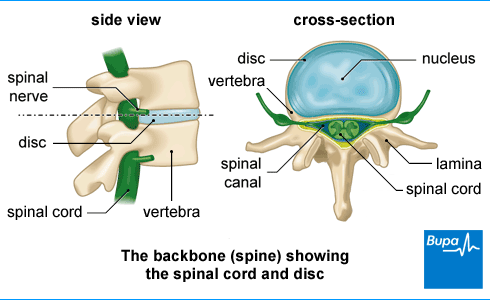
- Sciatic pain (sciatica). This spreads from your back down your legs. It may be caused by a prolapsed disc (when a disc in your spine bulges out of its normal shape and presses on a nerve).
- Back pain caused by ageing of the discs and facet joints in your spine (degenerative disc disease).
- Spinal stenosis. This is when the space around your spinal cord narrows.18 This then puts pressure on your spinal cord and causes pain.
How to manage lower back pain: a physiotherapist's guide
How to manage lower back pain | Watch in 4:34 minutes
Musculoskeletal Physiotherapist, Sabrina Danzig, explains three steps to managing your back pain so it doesn't become a chronic or recurring issue.
Most people will experience lower back pain at some point in their lives. And if you're in pain, it might feel like the best option is to sit on the sofa and avoid moving, but this can make things worse. Being still can tighten your muscles, weaken your muscles, and prolong your pain. Staying active is key to getting better. The good news is that nine out of ten people improve within six weeks if they manage their back pain correctly. In this video, I'll give you three key steps to help you manage your lower back pain effectively. Here we're talking about acute back pain, which is pain that lasts for about six weeks or less. It's often caused by something mechanical like repetitive movements or posture patterns, rather than an underlying condition or traumatic injury. So let's look at what you can do to make yourself feel better.
Step one is to relieve your pain. Don't panic; pain can be scary, but most cases improve with the right care and you won't need treatment to start with. You might need some short-term pain relief. This will help you stay active and relaxed. This could be over-the-counter painkillers like paracetamol or ibuprofen. These can help reduce inflammation and discomfort. You might also want to try some warm or cold therapy. This could either be using a hot water bottle, having a warm bath, or using a cold compress—whatever feels better for you. Most people find that warmth is better for their lower back, but some people like to alternate between hot and cold therapy. Just remember to put a towel between your hot water bottle so you don't burn yourself.
Step two is to stay active. Now that you've eased your pain, make sure you stay as mobile as possible. Even light activity can help reduce general stiffness and support recovery. Here are some of the things you can do daily: short walks—this could just be around the house or your garden. Do as much as you feel comfortable; even up to 100 yards is better than nothing. Try to build up slowly. You may find it might be a bit uncomfortable to begin with, but once you've warmed up, it should subside. Everyday movement—this is simply just moving around, making a cup of tea, tidying up; it all counts. If you sit at a desk, it's essential to try and move every 30 minutes. Set a timer on your phone or on your watch. Avoid long periods of bed rest because it can make your symptoms worse. Gentle stretches and mobility stretches help reduce stiffness and help keep your spine, joints, and muscles flexible. They can include pelvic tilts, knee hugs, and spinal rotations. If you're not sure what to do, follow our video featuring a physiotherapist: exercises for lower back pain.
Step three is to try and relax. Stress and tension can slow down the healing process. Stress hormones can affect our pain fibers and make pain feel worse. Relaxation techniques can help reduce muscle tightness and calm down this process. You can try some of the following: deep breathing—we're going to inhale for four, exhale for six, repeat five times a few times a day. Progressive muscle relaxation—this is where you gently tense and release muscles throughout your body, for example, your hands. There are gentle and guided versions online to try. Mindful movement like yoga or tai chi—these combine breathing with movement, which is a great combination to help your back pain. Meditation or guided relaxation apps or videos can help. Mindfulness-based meditation has been shown to help reduce pain. These techniques can help you feel more in control and reduce the emotional impact of your back pain.
If your pain lasts longer than six weeks, make sure you see a doctor. If they think your pain is being caused by something more serious like a badly trapped nerve, infection, or fracture, they may refer you on for further investigations. There are some red flags for back pain that mean you should seek help straight away: numbness, pins and needles, or weakness in both your legs, bottom, or inner thighs; sudden severe pain in both your legs at the same time; struggling to pee or control your bowels; loss of sensation in your genitals or around your back passage. If you have any of these, please seek urgent care immediately. These could be signs of a more serious condition called cauda equina syndrome that needs urgent attention.
Rest assured, though, most back pain improves with the right care. Remember the steps: relieve the pain, keep moving, and stay calm. If your pain persists for more than six weeks without improvement, seek help. Thanks for watching. You're now one step ahead of managing your back pain.
Aftercare for physiotherapy
Your physiotherapist will give you some advice about what you can do at home to help your lower back pain. This may include how to:
- improve your posture
- make sure your car seat or office chair is set up properly
Sitting at a desk all day can play a big part in back problems. Your physiotherapist may give you some recommendations about your workstation setup, including your chair and screen height. They may advise you on how often to take a break and move around during the day.
They’ll also usually give you a home exercise programme. This is a series of exercises to do at home between your physiotherapy appointments. Your physiotherapist will adjust the programme at each appointment, as you make progress.
Physiotherapy will only be one part of your treatment for lower back pain. You may also need to make some changes to your lifestyle and keep as active as possible. Your physiotherapist may advise you to:
- do some regular exercise to keep your back mobile and strong for everyday activities
- lose any excess weight – if you have a high body mass index (BMI) or are overweight, it can put an unnecessary load on your spine and add to your pain and discomfort
Side-effects of physiotherapy
You may find that certain exercises and movements make your lower back pain more uncomfortable for a short time. Your physiotherapist should monitor this and show you which exercises to avoid and which ones will help relieve your pain.
Manual therapies, such as manipulation, can have side-effects. These are rare, usually minor and don’t last for very long. You may feel some stiffness or discomfort in the area that was treated.
If your home exercises include movements that your muscles aren’t used to, it can cause your muscles to ache the following day. This is normal and will get better as your muscles adapt and get stronger. This is why it’s important to follow your physiotherapist’s advice and avoid increasing your activity too quickly.
It’s possible that manipulation could cause a more serious injury, but this is rare. Your physiotherapist should talk to you about the risks of manual therapies before they do any treatment.
Your physiotherapist should also check how you’re feeling as they do any ‘hands-on’ therapy and stop if you have any pain or discomfort.
Alternatives to physiotherapy
Different types of manual therapy can treat lower back pain. These all take a slightly different approach. In addition to physiotherapy, manual therapies are used by the following.
- Osteopaths look at the health of your body as a whole and aim to make sure all your bones, muscles and joints are working smoothly together. They focus on manual therapies to get your body back to a state of balance.
- Chiropractors, like osteopaths, look at your body as a whole. They’re interested in how problems with your bones, muscles and joints affect your nervous system and general health. Their focus is on manipulation of the spine – but they may use other techniques too.
Manual therapy can be done in many different ways. It can vary according to different types of training and also between individual practitioners.
It’s your choice which type of practitioner you see. But if you would like NHS treatment, you’ll most likely be offered physiotherapy because the other services are often not funded.
Physiotherapy services
Our evidence-based physiotherapy services are designed to address a wide range of musculoskeletal conditions, promote recovery, and enhance overall quality of life. Our physiotherapists are specialised in treating orthopaedic, rheumatological, musculoskeletal conditions and sports-related injury by using tools including education and advice, pain management strategies, exercise therapy and manual therapy techniques.
To book or to make an enquiry, call us on 0345 850 8399
Chiropractic for lower back pain
Chiropractic is a treatment where a practitioner called a chiropractor uses their hands to help relieve problems with the bones, muscles and joints, such as lower back pain.
Osteopathy
Osteopathy can help you to manage back pain, neck tension, aches and pains.
Epidural injections for lower back, leg pain
Sometimes spinal injections (epidural or nerve root injections) are used to treat chronic back and leg pain.
Did our Physiotherapy for lower back pain information help you?
We’d love to hear what you think. Our short survey takes just a few minutes to complete and helps us to keep improving our health information.
The health information on this page is intended for informational purposes only. We do not endorse any commercial products, or include Bupa's fees for treatments and/or services. For more information about prices visit: www.bupa.co.uk/health/payg
This information was published by Bupa's Health Content Team and is based on reputable sources of medical evidence. It has been reviewed by appropriate medical or clinical professionals and deemed accurate on the date of review. Photos are only for illustrative purposes and do not reflect every presentation of a condition.
Any information about a treatment or procedure is generic, and does not necessarily describe that treatment or procedure as delivered by Bupa or its associated providers.
The information contained on this page and in any third party websites referred to on this page is not intended nor implied to be a substitute for professional medical advice nor is it intended to be for medical diagnosis or treatment. Third party websites are not owned or controlled by Bupa and any individual may be able to access and post messages on them. Bupa is not responsible for the content or availability of these third party websites. We do not accept advertising on this page.
- Policy statement: Description of physiotherapy. World Physiotherapy. www.world.physio, published 2023
- Getting help for back pain. Chartered Society of Physiotherapy. www.csp.org.uk, last reviewed January 2019
- Find a chartered physiotherapist. Chartered Society of Physiotherapy. www.csp.org.uk, last reviewed June 2025
- Physiotherapists. Health and Care Professionals Council. www.hcpc-uk.org, published September 2023
- Low back pain and sciatica. Patient. patient.info, last updated October 2024
- GP mythbuster 15: Chaperones. Care Quality Commission. www.cqc.org.uk, last updated August 2024
- Consent and physiotherapy practice. Chartered Society of Physiotherapy. www.csp.org.uk, last reviewed July 2025
- Low back pain and sciatica in over 16s: assessment and management. NICE Guideline NG59. National Institute for Health and Care Excellence (NICE). www.nice.org.uk, last updated December 2020
- Musculoskeletal lower back pain. BMJ Best Practice. bestpractice.bmj.com, last reviewed October 2025
- How physiotherapy can help you at work. Chartered Society of Physiotherapy. www.csp.org.uk, last reviewed May 2019
- UK Chief Medical Officers’ Physical Activity Guidelines. Adult Physical Activity Guidelines. Department of Health and Social Care. www.gov.uk, published September 2019
- Overview of exercise. MSD Manuals. www.msdmanuals.com, last reviewed/revised July 2023
- Rowlands E and Pozun A. Osteopathic manipulative treatment: Suboccipital release. Statpearls publishing. www.ncbi.nlm.nih.gov, last updated March 2023
- Pollock Jd and Skidmore Ht. Osteopathic manipulative treatment: Hvla procedure - lumbar vertebrae. Statpearls publishing. www.ncbi.nlm.nih.gov, last updated July 2023
- Complementary and alternative medicine. Patient. patient.info, last updated March 2022
- Moorman AC and Newell D. Impact of audible pops associated with spinal manipulation on perceived pain: A systematic review. Chiropr Man Therap 2022; 30(1):42
- Back pain – low (without radiculopathy). NICE Clinical Knowledge Summaries. cks.nice.org.uk, last revised October 2024
- Assessment of back pain. BMJ Best Practice. bestpractice.bmj.com, last reviewed October 2025
- Sciatica (lumbar radiculopathy). NICE Clinical Knowledge Summaries. cks.nice.org.uk, last revised January 2025
- Perera RS, Chen L, Hart DJ et al. Effects of body weight and fat mass on back pain - direct mechanical or indirect through inflammatory and metabolic parameters? Semin Arthritis Rheum. 2022;52:151935. doi: 10.1016/j.semarthrit.2021.11.007
- Wang Y, Dalwood N, Farlie M and Lee AL. Adverse events related to physiotherapy practice: a scoping review. Arch Physiother. 2024;14: 138-154. doi: 10.33393/aop.2024.3282
- About osteopathy. General Osteopathic Council. www.osteopathy.org.uk, accessed October 2025
- Introducing chiropractic. British Chiropractic Association. chiropractic-uk.co.uk, accessed July 2025
- GCC Patient Guidance. Visiting a chiropractor. General Chiropractic Council. www.gcc-uk.org, published February 2022
- Urits I, Schwartz RH, Orhurhu V et al. A Comprehensive Review of Alternative Therapies for the Management of Chronic Pain Patients: Acupuncture, Tai Chi, Osteopathic Manipulative Medicine, and Chiropractic Care. Adv Ther. 2021; 38(1):76-89. doi: 10.1007/s12325-020-01554-0

 Member help and support