


High-functioning depression. Do you know the symptoms?

Your health expert: Dr Pablo Vandenabeele, Clinical Director for Mental Health at Bupa UK
Publish date 11 September 2025.
Next review 11 December 2025.
Dr Pablo Vandenabeele explores search trends around behavioural and thought changes. These changes could be a sign of high-functioning depression, but is that the only possible cause?
High-functioning depression research
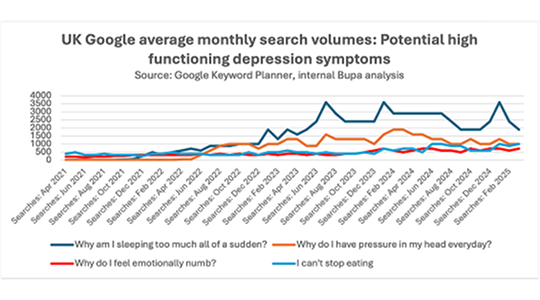
Yearly, Google search data analysis† from the UK indicates growing numbers of people struggling with how they feel and behave.
Since 2021, the following searches have increased significantly:
- Why am I sleeping too much all of a sudden?
190 times more searches - Why do I have pressure in my head every day?
100 times more searches. - Why do I feel emotionally numb?
Searches tripled. - I can't stop eating
Searches tripled.
† Bupa UK Insurance internal of UK’s monthly Google search volumes analysis. Research period: 1st April 2021 to 31st March 2025.
What is high-functioning depression?

High-functioning depression, sometimes known as smiling depression or functional depression, isn't a diagnosable medical condition.
High-functioning depression is a term used to describe a person's ability to appear positive and maintain their day-to-day responsibilities, while hiding emotional struggles under the surface.
Many of the symptoms associated with high-functioning depression are also symptoms of clinical depression. However, there are differences between the severity and length of the symptoms. High-functioning depression symptoms are much less intense, meaning you can still go about your daily life.
Thoughts on our high-functioning depression research
Dr Pablo Vandenabeele explains why trusted sources matter when something feels off:
Our research shows that more people spotting shifts in their outlook and behaviour. From feeling less emotions than usual to suddenly sleeping much more, noticeable changes to your body or routine can feel disconcerting.
“What's worrying is that we know more people are searching for help with their symptoms, but we don't know to what extent they re relying on information online or if they're speaking to a healthcare professional. Many of us turn to the internet to investigate any lifestyle or bodily changes but doing so can present you with many potential causes. The potential causes your search engine presents may be irrelevant to you, leaving you feeling overwhelmed, or worried about something that's not actually affecting you.
“For example, sleeping lots more could be a symptom of depression, especially if you’ve lost interest in things, but it could also be a sign of an underlying health condition, like obstructive sleep apnoea. Similarly, eating too much could be a sign you’re struggling mentally, or it could signal another health condition, such as thyroid issues or eating disorders.
“The other potential is that you convince yourself that your symptoms are nothing to worry about, delaying or avoiding treatment that could really help. The internet can be great to sense check symptoms. However, your body is complex. Changes to your mental health can have multiple causes.
“If you’re experiencing new sleeping, eating, thinking or feeling habits and can’t pinpoint why, you should always speak to health professional to explore your symptoms. With their context, they can help you figure our your next steps.”
Symptoms of high-functioning depression
- From the outside, you function well. You manage your work, family and social life, but it takes up a significant amount of your time and effort
- Persistent low mood or feelings of hopelessness
- You only feel happiness in short bursts
- You struggle to ever feel truly refreshed, even after a good night's sleep
- You find it difficult to control your emotions, for example, feeling teary for no reason
- You don't feel that you're worthy of your life, happiness or receiving compliments
- You find it hard to concentrate, even on things that usually bring you job
- You're regularly self-critical
- You can rely on unhealthy coping mechanisms to try and boost your mood, e.g., alcohol, drugs, cigarettes, junk food, video games

If you've had persistent low mood but you're managing to achieve your life's goals, you might think feeling this way is simply a part of your personality. The symptoms can develop over time, meaning sometimes there's nothing specific that triggers them. This may make it hard to realise when your symptoms actually start.
It might be hard to spot functional depression symptoms in others. This is because the symptoms may be easily concealed, so they're only noticeable to the person experiencing them. High-functioning depression can look different between one person and another.
What's the difference between high-functioning depression and depression?

High-functioning depression and clinical depression share symptoms, but the main difference between them is that symptoms are much more severe in clinical depression.
This means that those with high-functioning depression can often manage their personal and professional responsibilities, alongside experiencing persistent low mood.
Major clinical depression can make it very difficult to keep up with life's errands, including maintaining work and personal obligations.

How to get treatment for high-functioning depression
Even though functioning depression isn't something a doctor can clinically diagnose, living with the symptoms every day can take its toll.
If you find you re struggling with symptoms, you should always check if there s any way to ease what you're going through by speaking to health professionals.
You might find it useful to make some changes to your lifestyle. Small tweaks can have a big impact on your mood.
Coping with high-functioning depression

Eat a serotonin boosting diet
There's some truth in the old phrase 'you are what you eat'. Filling your plate with foods known to boost your mood is another simple way to take care of your physical and mental health.
Aim for your five-a-day fruit and vegetables, include wholegrain starchy carbohydrates and add a source of protein in each meal.
Be mindful of your salt, sugar and saturated fats intake and drink lots of non-alcoholic, sugar-free liquids throughout the day.

Open up
Despite how unnatural it may feel, gently encourage yourself to open up to others to help process your emotions.
Think about the ways you feel comfortable communicating. Next, think about who you d like to share your feelings with. Could it be a loved one, friend, colleague, counsellor or health professional ? Take your time and build things up slowly if it feels intimidating.
If you're thinking about the health professional route, potential high functioning depression treatment can include talking therapies and repetitive transcranial magnetic stimulation (rTMS).

Look after your physical health
Don't underestimate the power of moving your body every day, even if you don't feel like it.
A little bit of daily exercise sparks endorphins in your brain, helping you to view things more positively, and it can even reduce any pain you're in.
A 10-minute walk around our local neighbourhood or a morning yoga routine can make all the difference
Review how you spend your free time
Taking the time to look frankly at your lifestyle may help you see what may be worsening your mood:
- Prioritise getting enough sleep each night (aim for eight hours)
- Review your alcohol intake. Are you drinking more than the recommended allowance for the week? Or are you finding yourself binging lots of alcohol in one sitting? Along with disrupting your sleep, alcohol can often mask how you're feeling - and may leave you feeling worse.
- Recreational drugs and binge eating can also be harmful ways to mask how you're feeling. If you indulge, ask yourself why, and if there are any healthier ways to help cope with how you're feeling.
- Do you spend time doing things just for you? From enjoying a soak in the bath to doing arts and crafts, ensuring you're scheduling periods of relaxation for yourself can work wonders for your mental health.
Information about depression and support

Symptoms, causes and treatment for depression
Depression is a mental health condition where you have a continuous low mood and/or a loss of interest and enjoyment in your life. Everyone feels down from time to time.
But with depression, you have a persistently low mood for a couple of weeks or more, that has a significant impact on your life.

Health insurance with mental health support
We think the mind is just as important as the body. After all, it makes us who we are.
Bupa health insurance includes mental health cover as standard and covers conditions that develop after your policy has begun. You won't usually have cover for conditions you already had.
 Member help and support