




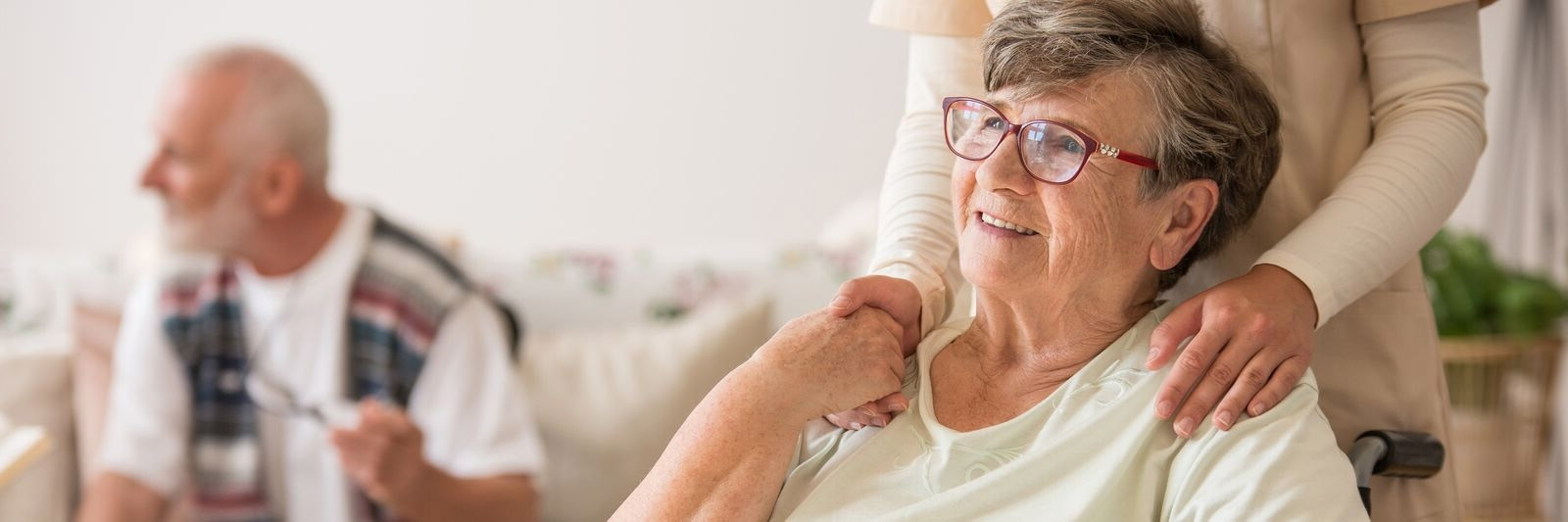
Dementia care homes
What is dementia care?
Dementia care offers specialist support to those living with dementia, at a point when standard nursing or residential care may not meet all of your loved one’s needs. Dementia is a set of symptoms rather than a single medical condition: these include problems with thinking, reasoning, learning, memory, language, and daily activities. These progress over time, so it becomes harder for those living with dementia to live independently.
At Bupa, we know that having to make decisions about your loved one going into a dementia care home can be very difficult. That’s why we’re here to offer you our full support.
Alternatively, browse by region to discover available care homes within a specific area.

Bupa dementia care homes across the UK
As a leading provider of dementia care, our care homes are focused on providing the very best support for all of our residents living with dementia.
Our priority is to see each of our residents as an individual and to treat them with respect, so they maintain their dignity. We help them to live life the way they want to, and to the fullest extent possible.
With the help of family and loved ones, we get to know our residents well, creating a picture of their life to date and making sure we tailor our care around their likes, dislikes and habits.
Understanding dementia
Explore the different types of dementia, signs, symptoms and what care services are available to you and your family members with Aileen Waton.
Transcript
Will we all get dementia?
No, the statistics show that the majority of us will not.
How many people care for a loved one with dementia?
As of 2025, according to the Dementia Car's Count charity,
there are nearly 1 million families caring for someone
with dementia.
What is a memory clinic?
A memory clinic is a specialist medical centre
for assessing, diagnosing and managing memory problems
and cognitive changes often linked
to dementia like Alzheimer's disease.
What brain training can we do to reduce the risk of dementia?
Keeping an active brain is important, but a broader
and more consolidated approach is needed.
Keep learning and challenging yourself throughout your
lifetime to build cognitive reserves so
that cognitive deterioration has less impact if it does
happen.
Can social isolation impact dementia or make it worse?
Research shows that social isolation can have an impact on
dementia and can exacerbate the loss of language and skills
and can cause depression.
The symptoms of depression are similar
and can exacerbate the symptoms of dementia as well.
Are there any warning signs that suggest it might be time to get a loved one seen by a professional?
If you notice some of the symptoms in combination,
not just the occasional lapse of memory,
and you are concerned, encourage your loved one
to visit a GP to identify
and treat any of the many health conditions
that could potentially cause the symptoms.
Dementia runs in their family should I be worried I might develop it?
Given that we can do so much to mitigate
or exacerbate our risk, we should focus on doing what we can
to reduce our risk and build cognitive capacity so
that we can function better for longer.
It is better to live well and focus on staying healthy.
How does dementia affect a person's daily life as the condition progresses?
Over time, the loss of abilities, skills
and comprehension means that the complex tasks
of everyday living become increasingly difficult
without the right support.
Eventually people may become dependent on others
for all aspects of daily living.
Is dementia something that only affects older people, or can it occur in younger adults too?
There are some rare cases of dementia
that have occurred in young people,
including small children, but these are extremely rare.
That said, young onset dementia often develops while people
are in their fifties and vascular
dementia can happen at a similar age if people's
cardiovascular health is poor.
Where can people go for reliable information and support if they have concerns about dementia?
People should start with the Alzheimer's Society
or offer more specific details to the Lewy Body Society
or Huntington's Association as they can offer links
to local support groups as well as provide a wealth
of reliable information.
A GP will give good advice
and can make a referral to a memory clinic for diagnosis.
What is dementia?
Dementia is an umbrella term used to describe a syndrome
or collection of symptoms that are caused
by many different diseases and conditions.
The diseases cause progressive
and incurable neurological damage,
which in turn causes cognitive impairments
that become worse over time.
These cognitive impairments lead to a loss of abilities
and skills for everyday living.
What is Vascular dementia?
Vascular dementia is caused by the cumulative damage
of small strokes, also known as transient ischemic attacks
that destroy brain cells.
Therefore, difficult or even impossible to predict where
and when damage will occur
and which skills will be affected.
Deterioration appears to occur in steps
as more damage accumulates.
Obviously, monitoring and controlling blood pressure
and maintaining a healthy lifestyle can slow the progression
of this disease.
What support is out there for those looking after a loved one with dementia?
Alzheimer's Society has lists of local groups
and services that will help support carers of people
with dementia so they can meet
with other people in the same situation
and gain mutual support.
The Alzheimer's Society also arranges events, outings,
activities, and training for families
of people living with dementia.
There are day centres
and respite beds in most care homes,
so people can have a break from the
stresses and strains of caring.
Your local GP will be able to signpost for further support.
Who are you?
So I'm Aileen Waton.
I'm the Chief Nursing Officer for Bupa Care Services.
I have worked at Bupa for almost 20 years,
and prior to that, also worked in the care sector.
I'm talking about dementia
because it's a global health challenge
and one that most people fear.
I have a son and a husband
and spend time doing things that I like outside of work,
which is walking, socialising,
and meeting up with friends and family.
What support is available for people living with dementia?
Support with the tasks
of everyday living is available from local authorities
or care agencies to help people remain as independent
as possible whilst they're living at home.
Most people will have to contribute towards
or pay for the services they receive whilst at home.
Memory clinics should be able to direct people
with a diagnosis of dementia to local support groups
that can give advice, arrange activities and social events,
and offer opportunities for education.
The Alzheimer's Society
or other local voluntary groups can support family cares
and people with dementia, with information advice
and practical support.
How does diet impact the chances of developing dementia?
Diet can significantly impact your risk
of developing dementia.
What you eat over time affects brain health
through inflammation, blood vessel health,
blood sugar control, and oxidative stress.
A brain focused version of the Mediterranean diet
that specifically reduces Alzheimer's risk, which
recommends eating a diet of leafy greens, such
as spinach and kale.
Berries like blueberries, beans
and lentils, whole grains, fish and olive oil.
Healthy diet can help reduce the risks
of developing dementia,
but will also help your overall health.
What is Alzheimer�s disease?
Alzheimer's disease is characterised by the buildup
of the protein derivative beta amyloid
and the protein tau in the brain.
Beta amyloid builds into plaques
or clumps in between neurons,
and this interferes with the signals
that send messages through the brain.
Tau acts on the neurons individually
and causes them to tangle and eventually die.
This process occurs over years,
commonly starting in the medial temporal lobe
and hippocampus spreading damage from there.
The symptoms may be noticeable for some time,
and deterioration from Alzheimer's disease is characterised
by a long, fairly slow decline.
Is there a cure for dementia or are there treatments that can help manage symptoms?
There is currently no cure for dementia,
but there is lots of research going on in this space.
Ongoing trials with new drugs,
which show some good results at reversing some
of the damage done by plaques,
but the treatment must be started early
and the evidence does not show
that there are permanent cure.
There are a number of treatments
to support better functioning in spite of the dementia.
Cholinesterase inhibitors are shown
to be effective in supporting brain function for up
to two years, as long
as the drugs are commenced early in the dementia
for slightly later stages of dementia.
Another type of drug blocks the effects
of overactive glutamate.
However, these drugs do not reverse any of the damage,
so they're not curative.
What can family and friends do to help someone who has been diagnosed with dementia?
Be understanding patient, supportive
and nonjudgmental support people's healthy lifestyles.
Support them to access rehabilitation activities
and local support groups, and also to live a full
and social life, if that's what they like before.
Attend an appropriate course if you can, so
that you can understand what might happen in the future
and find out what you can do to be helpful if possible,
make the environment as supportive as possible.
Preparing in advance of losing capacity can help.
Deciding on lasting power
of attorney can be a daunting thought,
but it will also allow you to plan ahead
so the right person is there to help you make the decisions
with your best interests in mind.
Can you walk us through how dementia is usually diagnosed?
People normally start by visiting a GP to talk
through their worries and investigate all
potential causes of the symptoms.
Medical investigations will help the GP to rule out
and treat all other causes of any symptoms.
This will usually include blood tests, other tests,
and possibly a CT scan
or MRI scan to help
to rule out any conditions like a brain tumour
or a bleed on the brain,
and when all such conditions have been ruled out.
A GP should make a referral to a memory clinic
for follow discussions, assessments
and exploration of symptoms,
and possibly specialist brain scans.
Some tests or assessments may be repeated
after an interval of time
to better understand the pattern that any changes.
How many people can be affected by dementia and at what age?
The Alzheimer's Society in 2025 estimated
that there are currently 982,000 people in the UK
living with dementia.
Age is a risk factor, though it's by no means the only one
between the ages of 65
and 69 years, two in every 100 people will have dementia.
The risk then doubles every five years.
So at the age of 75, 4 in 100 people will have dementia
at 80 years, eight in 100 at 85, 16 in 100,
and at 90 years, 32 in 100 people will have dementia.
Alzheimer's disease is thought to account for two thirds
of all dementias in the uk,
while vascular dementia is the second most common cause.
Are there things people can do to reduce their risk of developing dementia?
There's a lot we can do to reduce our risk
of developing dementia,
and it's important to understand our risks at
different times in our lives.
Taking care of your health throughout your life,
and investing in building cognitive reserve like brain power
as this can help you reduce your risk
of developing dementia.
There are 14 modifiable risk factors,
these being hypertension, hearing loss, diabetes,
excessive alcohol intake, obesity, smoking, depression,
physical inactivity, social isolation, air pollution,
visual loss, traumatic brain injury,
and high LDL cholesterol.
Taking proactive steps in each
of these risk areas can help reduce your risk
of developing dementia.
How can someone tell the difference between normal forgetfulness and dementia?
So we've all had moments where we've misplaced car keys,
mobile phones, and spent far too long looking for them.
This is just general forgetfulness
and not an indication of dementia on its own context,
is everything being tired, unwell, having low blood sugar,
being worried and distracted, or just being busy
and rushing around all the time can all mean we become more
absent-minded and more likely
to misplace, lose, or forget things.
There are many clinical conditions such
as a hormone imbalance, electrolyte imbalance, infections,
depression, or taking a new prescription that can cause us
to lose concentration.
So it would be a mistake to assume
that a memory lapse is caused by dementia.
It could be sensible, though to check out any health issues
that could cause such symptoms.
And again, I would recommend anybody
who had concerns about their memory to speak to their gp.
What is Dementia with Lewy Bodies?
Dementia with Lewy bodies is closely related
to both Alzheimer's disease
and Parkinson's disease,
which means it's sometimes misdiagnosed
and dementia with Lewy bodies.
The damage is caused by the buildup of proteins
inside neurons that disrupts and eventually destroys them.
The damage can occur anywhere in the brain.
Dementia with Lewy bodies is characterised by difficulties
with movement, concentration, alertness,
which can vary from hour to hour or day to day,
and hallucinations, which may be misperception caused
by the incorrect processing of visual information.
As the disease progresses, memory
and other skills will also be affected.
As with Alzheimer's disease, progress is a steady decline,
but often much faster.
It's common for people with dementia, with Lewy bodies
to develop Alzheimer's as well,
especially in their eighties.
Do you have a personal experience of dementia and how did it make you feel?
Yeah, so I've worked in care homes for over 20 years,
and during that time I've cared for lots of people living
with dementia and lots of people
who don't live with dementia.
That was an amazing privilege.
I've got to know some really nice people and their families,
and you quickly become a part of their world
and can make a difference to people's quality of lives.
I've experienced where people have been admitted
to the care homes that I've been working in
and they've had no mobility, for example,
and they've been able to start walking again
and regain their mobility to the point
where they can live a much more independent life despite
being in a care home setting.
I've also met people who had an ability to eat
and have regained the ability
to eat whilst being in our care,
and then they become more independent
and free to enjoy the rest of their lives.
The people that I've met were able to live rich
and fulfilled lives despite their diagnosis,
and it's really important not to let
that diagnosis define you.
What is Fronto-temporal dementia?
Frontotemporal dementia, sometimes called FTD,
takes its name from the parts of the brain initially
and most profoundly affected by the disease.
Damaging the frontal and temporal lobes causes them
to shrink and the connections between them
and other parts of the brain to break down,
there are two types of frontotemporal dementia,
behavioural variant, where the frontal lobes left
and right hemisphere are implicated,
and primary progressive aphasia
where the temporal lobes are impacted
and behavioural variant frontotemporal dementia.
The frontal lobes, which are responsible
for the executive functions such as planning,
decision-making, controlling emotions,
and assessing what is appropriate are damaged.
This gives rise to changes in behaviour
and a different presentation of someone's personality.
And PPA variant of frontal temporal dementia.
The damage to the temporal lobes causes increasing damage
to language and communication,
but over time, the differences between the two types
of FTD become less distinct,
and as damage spreads to other parts of the brain,
the symptoms become more like Alzheimer's disease.
What are some of the early signs or symptoms people should look out for dementia?
No two people will experience dementia in the same way,
and symptoms will vary from one person to another,
and having learning disabilities complicates even further
how symptoms will show.
However, the most common early symptoms
of typical Alzheimer's can include memory problems, problems
with concentration, problems with language thinking
and reasoning changing in how people see and hear things,
and changes in mood.
There are some less common manifestations known
as atypical types of Alzheimer's whose symptoms can vary.
The most common early symptoms
of vascular dementia include problems with planning
or organising things, making decisions
or solving problems, difficulties following a series
of steps and a familiar task, slow speed of thought
and problems concentrating,
including short periods of sudden confusion.
That said, the symptoms could include memory
problems or language problems.
Dementia with Lewy bodies, for example, can be harder
to recognise because some people may appear
to have Alzheimer's disease
or they may be mistakenly diagnosed with delirium.
A person with behavioural variant
of frontal temporal dementia could struggle to focus
and become distracted easily
or find it difficult to plan, organise, and make decisions.
They may also behave in ways
that are socially inappropriate.
For example, being rude to someone
or about others, behave sexually in public,
or seem to stop caring what other people are thinking
or feeling, or perhaps appear to be less friendly
or less interested in socialising.
They may lose motivation
or even become obsessive and repetitive.
A person with primary progressive aphasia, variant
of frontotemporal dementia will primarily have problems
with language and other problems related to mood thinking
or behaviour are less noticeable.
Early symptoms of primary progressive aphasia can include
having trouble with vocabulary
and forgetting what common familiar objects are for.
Alternatively, people may speak more slowly,
use shorter sentences, have difficulty speaking,
or even say the opposite of what they mean.
If you're concerned about yourself
or anyone else, please speak to your GP.
When is dementia care appropriate?
The later stages of dementia can be challenging for both the person living with the condition and those close to them. It can be hard to know when the time is right for a person with dementia to move into a care home – and who should make the decision, if the person can’t make it themselves. However, specialist dementia care can help to meet their needs as their condition progresses, and eases the burden and distress of those who’ve been caring for them.
If you’re looking for support for a loved one who’s living with dementia, our helpful customer care advisers offer free advice on anything from an understanding chat to finding just the right dementia care home.
Specialist dementia care homes for older people
If your loved one is struggling to live independently, or it’s becoming difficult to keep on top of their care needs, it might be time to consider a specialist dementia care home. Our 24-hour dementia care can ease the worry
Person First training for dementia care
Person First means that we put our residents’ experiences, wellbeing, needs and feelings at the centre of all that we do, and that we have empathy for their daily experience. All of our carers and nurses complete this training, and some have become coaches themselves.
Dementia support inside our homes
To make life a little easier for residents, many of our dementia care homes include picture signs for easy accessibility, contrasting colour schemes to help with identifying rooms and objects, and secure indoor and outdoor spaces.
Common types of dementia
Dementia describes a number of symptoms affecting the brain. This means that there are different types of dementia, and they require different types and levels of care.
Alzheimer’s disease
Here, there is damage to the brain’s ability to send signals between nerve cells. This affects the ability to think and communicate actions to the rest of the body.
Development: Slowly over time,
Early symptoms: Difficulty learning new things; confusion with dates and times.
Vascular dementia
This involves a lack of blood to the brain due to blocked or leaking blood vessels, cause brain cells to die. This can sometimes occur after a series of small strokes.
Development: Fast, getting worse over time.
Early symptoms: Personality changes; memory loss; confusion.
Dementia with Lewy bodies (DLB)
With DLB, clumps of protein form inside brain cells. This is usually in areas responsible for thinking, visual perception and muscle movement.
Development: Slowly over time.
Early symptoms: Hallucinations; fluctuation in mental ability, attention span and alertness; disturbed sleep.

What dementia care support is available?
Dementia care offers specialist support in meeting the needs of those living with dementia symptoms. However, good dementia care also provides support for their family and friends as they come to terms with their loved one’s condition.
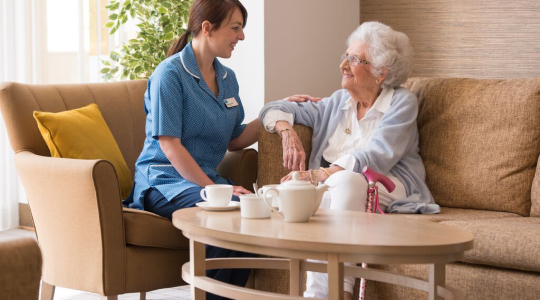
At Bupa, our dementia care comes with a personalised care plan for each of our residents. We prioritise getting to know each resident and their relatives individually, so we can best support you all. We tailor our care around everything from the meals each resident most enjoys to the activities they like and their preferred bedtime routine.
Help with funding for dementia care
Understanding how to fund dementia care costs can be confusing. Our dementia care homes are available to everyone, so you don’t have to be a Bupa customer.
You might be eligible for financial support from your local authority. Our customer care team will talk you through your options for funding your loved one’s dementia care.
Learn more about dementia and providing support

What's the difference between Alzheimer’s and dementia?
Bupa's dementia lead, Fran Vandelli explains more about Alzheimer’s and dementia and what is meant by both terms.

How to support someone to live well with dementia
Explore how you can help someone with dementia live life to the fullest by prioritising their mental and physical health.

Maintaining communication with people living with dementia
Read our health expert’s information on dementia and communication to help you and your loved one understand each other better.

Dementia and sundowning
Read our health expert's advice for supporting those living with dementia whose symptoms worsen as the day progresses sometimes known as sundowning.



Help when you need it
Choosing a care home can be stressful, especially if you've never done it before. Where do you start? Well, right here. Our helpful, understanding care advisers offer free advice on anything from funding to finding just the right home.

Call a customer care adviser on 0345 600 4622^

Ask us to assess your situation and talk to you about paying for care, and how funding works.

Find care homes that might be right for you, and book one or more visits.
^We may record or monitor our phone calls. Lines are open 8am to 6.30pm Monday to Friday, 9am to 12.30pm Saturday. Closed Sundays and bank holidays. Calls are charged at no more than local rate and count towards any inclusive minutes from mobiles.
